
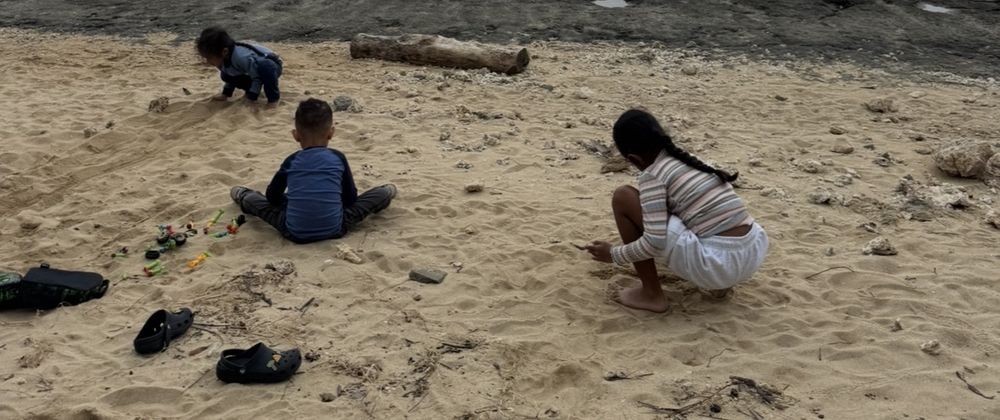

In the Pacific sits a success story of financial inclusion. Fiji has spent the last decade doing something incredible. Adult financial access increased from 64% (as reported in 2014) to nearly 87% in 2022. In doing so, the country surpassed its national targets ahead of time. However, beneath that success is another number, or lack of it. As of 2020, only 4% of children under the age of 14 hold savings accounts in a formal financial institution and there is no data that shows what percentage of these accounts are consistently used and active. That 4 percent is captured through bank records alone. Child accounts that exist are passive savings products managed by adults, not tools designed for a child's own learning or participation.
The gap nobody is measuring:
The Reserve Bank of Fiji's National Financial Inclusion Strategy 2022-2030 has four thematic areas of development; Inclusive Finance, Digital Financial Services, MSME Finance, and Consumer Protection and Financial Capability. Youths have been mentioned as being one of many at the centre of this initiative as they are considered one of the most vulnerable and underserved. However, children under the age of 14 remain in the shadows.
What this looks like in a Fijian Family?
Children are growing up without any practical form of learning about the digital economy that they are growing up in. Most of them have no idea what it means to make a decision about money and how to move and use it wisely. It arrives, it disappears and the cycle continues. Basically, there are generations of children who are inheriting exclusion well before they have a chance to be included, and then in adulthood they are expected to manage money and thrive well based on theoretical lessons. Financial literacy workshops almost become a form of intervention. And we cannot continue to intervene in adulthood. Our children deserve the foundational financial literacy tools and supervised access that will allow them to develop healthy habits that will naturally follow them into adulthood.
The remittance opportunity
Fiji receives one of the highest inflows of remittance in the Pacific. A 2020 report by the central bank showed that remittances within a ten year span averaged FJD433.2 million, which was equivalent to 4.7% of the GDP. In 2022, personal remittances surpassed FJD 1 billion for the first time, and 2024 this increased to FJD 1.231 Billion.
For most families, these remittances are not a form of supplementary income, it is their lifeline. Despite the amounts of remittances coming into our country, our socioeconomic environment is not a reflection of that investment from our diaspora living overseas. To be clear, this is not a criticism of those who receive these remittances. It is the questioning of a system and infrastructures that were not designed with our people in mind.
Now, the remittance opportunity in discussion here is not so much about what we could do with money that is arriving right now, but more so what the "invisible generation" might be able to build with it if they are given not just literacy, but also early access. How can we begin to teach our children to think of remittances as more than a source that sustains the present, but as something that could help them secure and build their future. And what if they arrived at that future knowing how?
A few questions to sit with
What if financial literacy was a true form of empowerment instead of a form of adult intervention?
What needs to change for our children to be seen in this digital economy that they are simply existing in?



Top comments (0)