


Brief Project Description
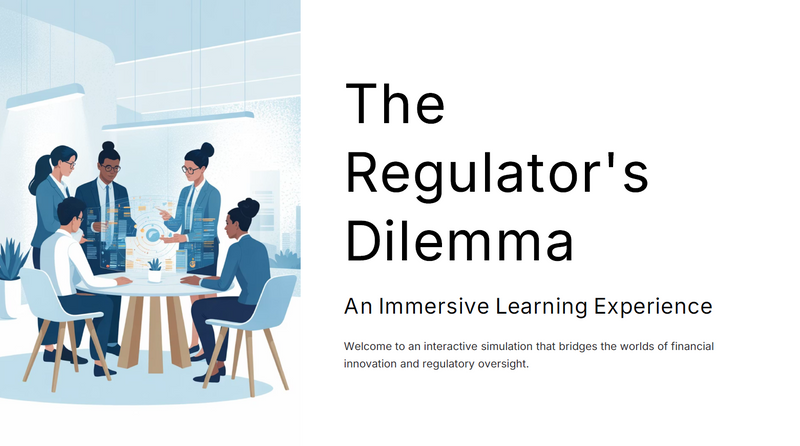
The Interledger Foundation (ILF) granted Contigo Global LLC to a) introduce immersive learning concepts to the Foundation’s Summit Program Committee; and b) to design and implement a new, relevant immersive learning session for the ILF 2025 Mexico Summit: The Regulator’s Dilemma.
Project Update
Phase 1:
The first orientation session with the ILF Summit Program team was a success—walking through a digital boardgame engaged participants and helped them think through challenges of digital financial services (DFS) in rural contexts.
In Mexico, the Women’s Immersive Experience generated strong reactions. Participants appreciated how it highlighted the frustrations that many rural, low-income women face daily. They also asked critical questions about realism and agency, which will inform future iterations of the design.
Through listening sessions and co-creation, we developed two new immersive learning concepts. Following a team vote, The Regulator’s Dilemma was selected for implementation at the November ILF 2025 Summit in Mexico City.
Phase 2:
Headline Results
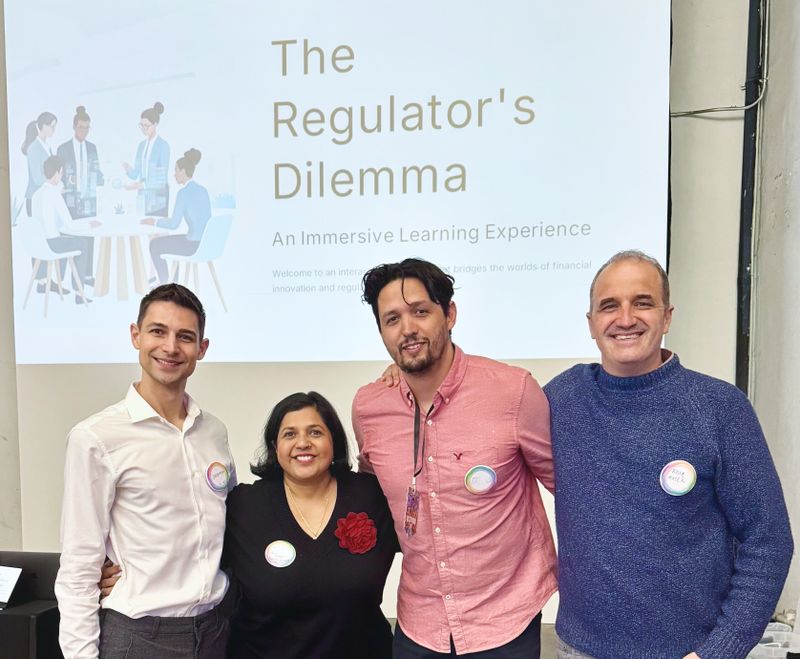
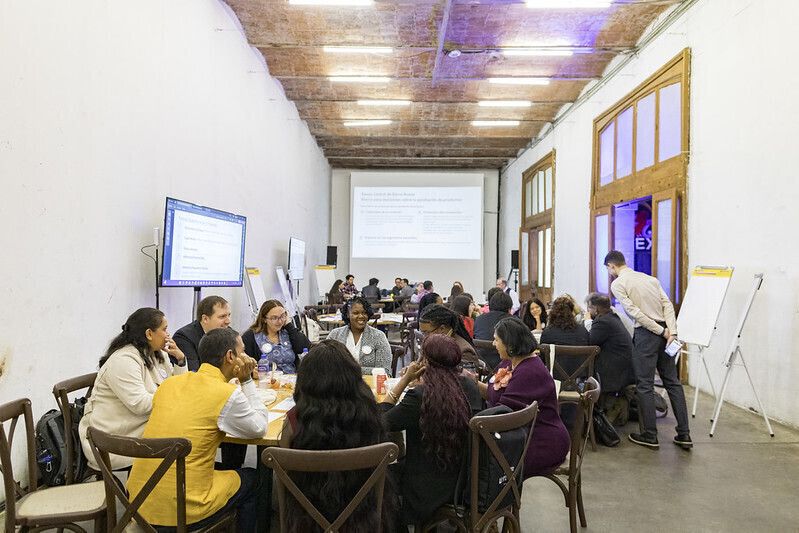
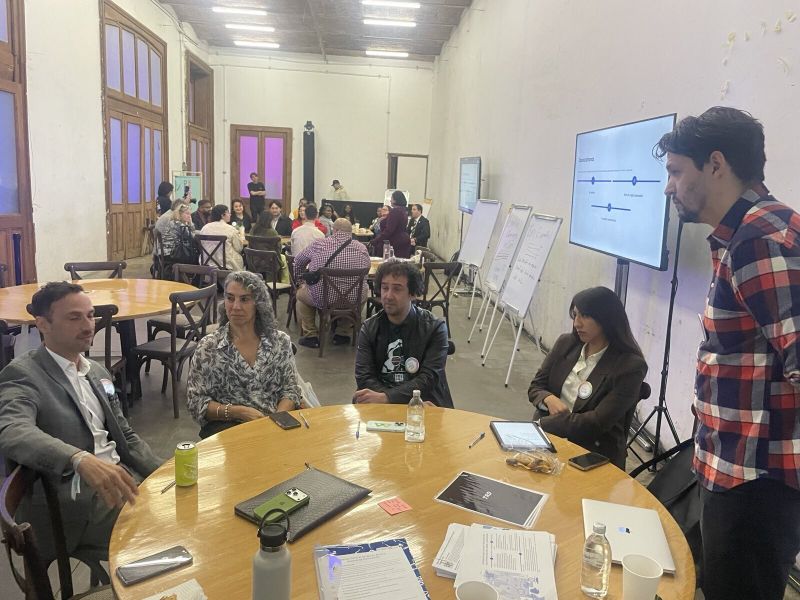
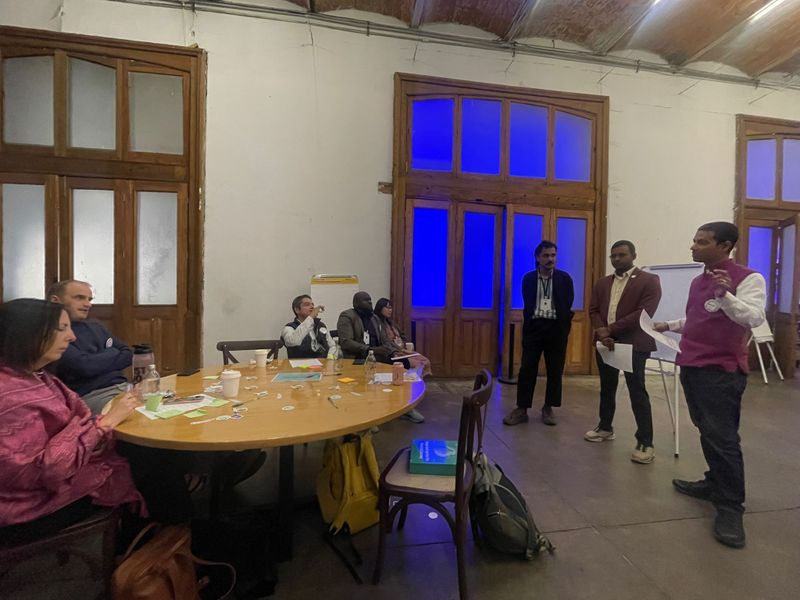
Across three sessions between November 4–6, more than 40 participants—including ILF staff, global experts, university students, and professionals new to the topic—immersed themselves in The Regulator’s Dilemma, an experiential learning game that simulates the real trade-offs behind modern financial regulation.
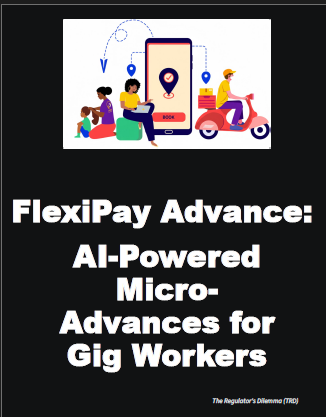
Participants presented, debated, and randomly selected two of the four provocative FinTech innovations -which were designed to explore the balancing act between expanding the frontier of product innovation and ensuring safeguards are in place for consumers:
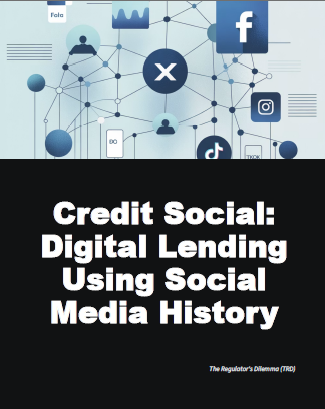
Credit Social – a digital lending product which provides loans based on social media history
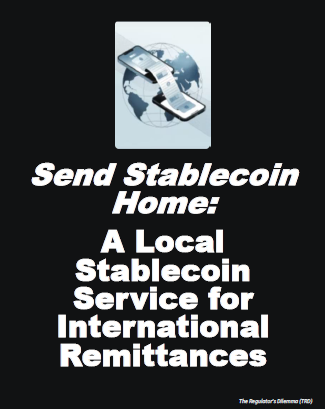
Send Stablecoin Home – a stablecoin-powered international remittance solution
Across all sessions, teams demonstrated a deep understanding of regulatory decision-making, asking pointed questions about:
- What counts as true innovation
- Where consumer protections are (or are not) embedded
- How products meaningfully serve marginalized communities
- How risk factors that are not directly related to financial services (e.g. data privacy) can be factored into a central bank’s decision-making and requirements
The result: thoughtful, sometimes intense, and surprisingly humorous debates—ending in realistic, well-justified approvals with conditions
Project Impact & Target Audience(s)
These immersive experiences were designed to build empathy and spark innovation around financial inclusion, particularly for women, rural communities, and other marginalized groups in emerging markets. By helping participants step into these lived experiences, the sessions are shifting how financial services are imagined, making them more inclusive, relevant, and impactful. We were especially impressed and touched by the participation of bachelor students from Bowie State University –who absorbed learning and participated actively and enthusiastically.
Progress on Objectives, Key Activities
Phase 1:
Mexico WorkWeek Preparation - Actively contributed to meetings leading up to the Mexico Workweek.
WorkWeek Participation - Actively Participated and Contributed to Meetings, Workshops, and Field Visits in Mexico WorkWeek in Mexico City from May 19- May 22, 2025 (Travel Days May 18, May 23)
Prepare and Deliver a Brief Training (Possible Topics: 3rd Generation Learning Models, Digital Development, Digital Public Infrastructure, Payments Infrastructure, etc) - – I had the pleasure of presenting [presentation link here] to the group on May 9th. It was well received, with many questions and feedback. The group seemed to enjoy the boardgame. I also shared an article on LinkedIn that further explained the concept.
Prepare, deliver, and model a “3rd Generation” Training in Mexico City WorkWeek (examples: Immersive Digital Finance Gender Training or Is DPI Gender Neutral Debate) – I delivered a training called the Women’s Immersive Experience with DFS on May 20th with the team. See analysis above on team feedback on it. It inspired quite a bit of feedback, both on this experience and on aspirations for future immersive learning sessions.
Post workshop, prepare and deliver 1-2 Concepts for 3rd Generation Immersive Training on the Topic of Interest Based on Mexico City WorkWeek Engagement. – I created two concepts, “The Regulator’s Dilemma” and “Connected Futures”.
- The Regulator’s Dilemma is an engaging, debate-driven role-playing game that places participants in the complex intersection of financial innovation and consumer protection. Players alternate between being FinTech innovators and regulatory panels, simulating the real-world tensions faced by policymakers. Each round, teams debate whether to approve, conditionally approve, or reject emerging financial technologies. The game is designed to promote thoughtful discussion, challenge assumptions, and surface the ethical and structural trade-offs embedded in regulatory decision-making.
- Connected Futures: Designing the Internet of Opportunity as Market Bridge Builders is a dynamic, team-based learning simulation. In this immersive experience, players become innovation teams inside fictional ecommerce companies, working to design inclusive solutions that increase access to ecommerce for vendors - with an emphasis on rural geographies, poor women and/or marginalized communities.
Phase 2
- Recruitment of 1-2 International Facilitators. In addition to ILF Program Team Technology Lead, Jeremiah Lee and myself, I recruited Consumer Protection & Regulatory Expert Rafe Mazer and Latin American Financial Services expert Pablo Antón Díaz. This enabled us to offer both Spanish Language and English language sessions.

2. Development of Materials for the Regulator's Dilemma Session.
A tremendous amount of content development went into developing materials for The Regulator’s Dilemma (TRD). I worked both on the content (with support from Rafe Mazer and Jeremiah Lee) and the design. The materials developed were:
An Overview Presentation. This provided an introduction to the session, the game play, the inspiration behind the session, an overview of the fictional country Sierra Nueva, its Central Bank and its newly formed Innovation Unit.
FinTech Innovation cards (4) – These were laminated cards chosen at random by a player from the FinTech team that determined their FinTech Innovation.
Regulatory Presentation. This was used to brief the Regulatory team on their KPIs, decision making criteria and a general overview of the type of product that would be presented to them.
Regulatory 2-page Briefer. This was a worksheet used to help remind participants of what their decision-making criteria was, and how to calculate a “score” to help them decide to approve, disapprove or approve a product with conditions.
FinTech Presentation. This was used to brief the FinTech team on their product, understand the Regulatory KPIs used to assess the product, and the construction of their presentation
FinTech 2-page briefer. This was a detailed explanation of the product – brief description, target market, product benefits, potential risks and hot-button issues. On the back page was a “Product Presentation Worksheet” that helped the FinTech teams construct their 5 minute presentation to regulators.
All materials other than the playing cards were translated into Spanish and vetted by Rafe Mazer. Content was edited for formatting and copies were made in both English and Spanish allowing for the experience to be as inclusive as possible.

- Test TRD Session Concept with ILF staff and/or others and iterate. We tested TRD both in a small group digitally on October 23rd and in-person the day before the Interledger Summit. The virtual run-through provided helpful feedback and suggestions. We simplified the content and the gameplay to make the overview more succinct and the scoring and evaluation process easier to understand.
The feedback we received from the in-person run through we did with Interledger staff (Darian Avasan, Marian Villa, Sarah Jones) and grantee (Xiaoji Song) the day before the Interledger Summit was transformational. We went back and spent hours updating the presentations and updated the Run Of Show to reflect these learnings. For example:
- We realized the FinTech team would need more time (they were allocated 20 mins, needed 30).
- The formatting of slides needed to be more reader-friendly and shorter
- We moved more quickly to the 2 groups in the game flow
- We limited the Regulatory team to ask questions only focused on the 5 topic areas we asked the FinTech teams to prepare to keep the process aligned with the specific areas a central bank would be interested in/permitted to consider in a real-world product review.
4. Facilitate and Deliver the Regulator's Dilemma Session at the ILF 2025 Mexico Summit
_Results*: What Happened in the Room_*
The sessions exceeded expectations—even among experienced policymakers, technologists, and consumer protection professionals. Participants quickly tapped into creativity, pushed beyond their defaults, and engaged with each other’s reasoning.
What We Observed
Participants brought their biases into gameplay—just as real regulators do. One regulator said, “I don’t want to make decisions based on my natural biases,” prompting a conversation about how unavoidable and important this self-awareness is.
Role-switching amplified learning. Experienced regulators were placed on FinTech teams; those new to policy became regulators. This produced fresh insights, new empathy, and richer debates.
Students thrived. Bowie State University participants asked sophisticated questions and even volunteered to present regulatory findings—an encouraging sign of how accessible yet challenging the game is.
The game “flexed” to its audience. Experts went deep on risk, data, and ethics. Newcomers asked foundational questions. Everyone contributed meaningfully.
Session Highlights
November 5 – English and Spanish Sessions:
Both groups selected Credit Social, leading to spirited discussions on data privacy, inclusion, and the ethics of alternative credit scoring. The final decision—Approval with Conditions—reflected balanced reasoning across innovation, consumer protection, and underserved markets.
November 6 – Expert Session:
A smaller but high-powered group debated Send Stablecoin Home. The FinTech team chose to take on FX risk themselves, adjusting the product design to make it less risky for consumers (although possibly less innovative as well), reflecting the real-world tradeoffs innovators must consider when seeking to bring new products to market. The regulators team probed deeply into transparency, safety, and user awareness, as well as querying how this product would serve under-included populations. The final outcome was an approval informed by nuanced understanding of stablecoins and remittance dynamics.
Special Moments & Reflections
“Anyone can be creative if given the right conditions.” Participants—from veteran policymakers to bachelor students—proved this true.
This is the hardest game we’ve designed—for both facilitators and players—but also the most rewarding.
Designing the products requires multiple rounds of testing and redesign. They need to balance benefits/possible risks in a way that their approval/rejection is not clear, and have enough detail to inform presentations, but not write the whole pitch for the fintech team.
Our exercise on “one word describing regulators” revealed interesting sentiments: intimidated, fear, formal, slow, biased, hierarchical. It sparked meaningful reflection.
Reactions to Mandated Role Reversal. Experienced regulators placed on fintech teams expressed initial displeasure at the unexpected role reversal, but gratitude afterwards for the experience of having to advocate for an innovation. Post-game reflections resulted in real-world regulators asking the game’s regulators about the differences from their expected strategy.
Once More, Please. 2 attendees came to the second session just to play the opposite role they played in the first session.
Communications and Marketing
Nothing as of yet, but we will be posting on LinkedIn highlighting the work.
What’s Next?
Work on TRD has cemented the interest and impact of Immersive Learning Experiences as an “accidental” vertical in the Contigo Global’s consulting practice. As more organizations learn more about the opportunity of using TRD as fast, dynamic learning tool for their staff and stakeholders, we hope that this will be a thriving practice within Contigo Global that leverages all the feedback and learnings from this first iteration. It is our hope that more Conferences, Trainings and other engagements take a more interactive, Immersive Learning Approach to help drive true engagement in learning.
If we have further support, we have determined the following items could improve the game:
A Facilitator’s Guide
Short video explainers for each product
Expanded use cases, including Payment-on-Delivery
This is a model ready to be replicated in classrooms, accelerators, central banks, and community labs around the world.
Community Support
Please continue to promote The Regulator’s Dilemma as a learning tool for you and your colleagues! Follow Nandini Harihareswara on LinkedIn for future updates, and if you are interested in replicating TRD in your organization, please reach out to nandini.contigo@gmail.com.
Additional Comments
If you enjoyed the session and have additional feedback, please share. If you want to learn more, please reach out for a free introductory consulting session!



Top comments (0)