

Brief Project Description
Nepal Interledger Financial Network (NIFN) is a non-profit initiative led by the Nepal Internet Foundation to enable interoperability across Nepal’s fragmented digital payment ecosystem. It connects underserved Type C cooperatives to modern digital finance using the Interledger Protocol. By developing a middleware layer compatible with ISO 8583 and integrating with the Rafiki platform, NIFN allows seamless, low-cost transactions between previously disconnected and isolated systems. The project focuses on financial inclusion, enabling millions of cooperative members to send and receive money and merchant payments across banking and financial institutions (BFIs) efficiently, securely, and in real time.
Project Update
Nepal Interledger Financial Network (NIFN) project is progressing steadily and remains on track with its overall timeline. During this period, the focus has been on building a strong technical foundation while also engaging closely with cooperative and BFI partners.
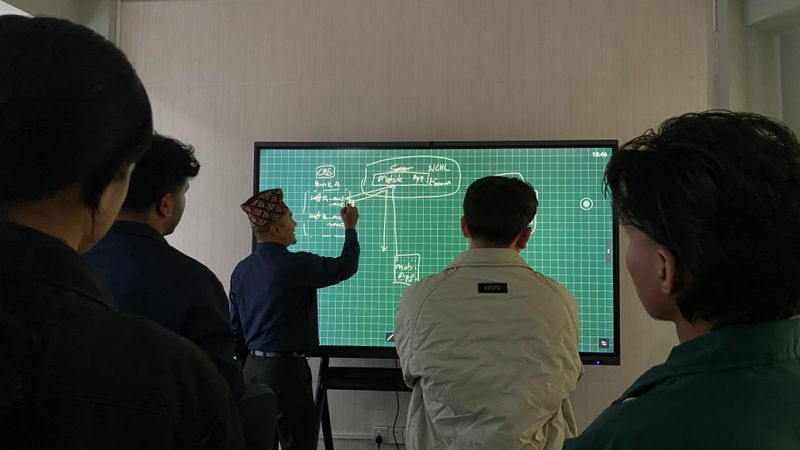
On the technical side, NIF has made good progress in developing the middleware system and initiating integration with the Interledger (Rafiki) platform. The system is currently in the testing and simulation phase, where we are validating how transactions will work across different institutions. While this has been a complex process, especially bridging ISO 8583 with ILP and other protocols, the team has been able to manage it well with expert support, service and continuous iteration.
A major highlight has been the trust and interest shown by cooperatives and BFIs. Through field visits, training, workshop sessions, and one-on-one face-to-face meetings, we have signed MoUs with 13 cooperatives who are willing to participate in the pilot. These engagements have not only helped us refine the system based on real needs but also built confidence among stakeholders.
One of the challenges we faced was varying levels of digital understanding and financial literacy among cooperative members, especially in semi-urban and rural areas. To address these issues, we took a more practical, orientation-first approach, focusing on clear communication rather than technical complexity.
Overall, the project is now moving from installation and integration to development toward pilot implementation, which will be a key milestone in the next phase.
Project Impact & Target Audience(s)
Nepal Interledger Financial Network (NIFN) is designed to create meaningful impact by improving access to digital financial services for underserved and often excluded access to finance communities in Nepal. Its primary target audience includes members of cooperatives and, simultaneously, other BFIs, which collectively serve millions of people, particularly those in semi-urban and rural areas who have limited access to formal banking systems.
Intended and Emerging Impact:
NIFN enables interoperability between previously disconnected cooperative systems, allowing members to send and receive money across institutions, merchant payments easily, securely, and at low cost. This directly improves financial inclusion, reduces dependency on cash-based transactions, and increases efficiency in local economies.
Target Beneficiaries:
• Women and Girls: A large proportion of cooperative members in Nepal are women, especially in savings and credit groups. By enabling easier access to digital finance, NIFN supports women’s financial independence and decision-making power.
• Rural and Marginalized Communities: Many cooperative members come from underserved regions with limited digital infrastructure. NIFN helps bridge this gap by connecting them to modern financial systems.
• Low-income and Informal Sector Workers: These groups benefit from affordable and accessible financial transactions without needing traditional banking access.
• Other marginalized groups: Including socially and economically disadvantaged communities who rely on cooperatives as their primary financial institutions.
Alignment with Interledger Foundation Mission:
NIFN aligns its mission with the Interledger Foundation by creating open, reliable, and secure digital financial systems using the Interledger Protocol. The project is not just creating new technology (middleware that connects ISO 8583 with ILP) but also raising awareness, building skills, and encouraging the use of open and secure payment systems among local financial institutions.
By combining technical innovation with community engagement, NIFN is helping create a more inclusive, connected, and equitable digital financial ecosystem in Nepal.
Progress on Objectives, Key Activities
Platform Development
NIFN platform development has made strong progress during this reporting period, focusing on building an open, secure, and interoperable financial infrastructure that connects Nepal’s cooperative and BFIs systems with the Interledger Protocol. The team has completed key foundational work in system integration, architecture design, and system integration testing, while also preparing the infrastructure for real-world deployment and pilot implementation with partner cooperatives and BFIs.
Key technical achievements include:
- Initiation and partial completion of Rafiki API integration, enabling ILP-based payment routing.
- Development of a middleware translation layer implementing ISO 8583 message formatting to ensure compatibility with existing Nepali financial institution systems (cooperatives, BFIs).
- Architecture design finalized for the cloud-native deployment environment using Docker/Kubernetes for scalability and data sovereignty.
- Integration of a PostgreSQL-backed ledger system for reliable data storage, double-entry accounting, and liquidity tracking.
- Security layer defined and development commenced, ensuring atomic transaction processing.
- Partnered with Silverlining Pvt. Ltd. to host our ISO-aligned Rafiki node in a production-ready cloud environment with full stack Data Center and Disaster Recovery (DC/DR) capabilities, supporting a smooth transition from SIT to pilot deployment.
The platform is currently in Phase 1 as outlined in the NIFN phased roadmap. Development is progressing on schedule toward a controlled pilot involving cooperative and BFIs institutions for domestic transfers.
Community Outreach
NIFN has carried out active grassroots outreach to build awareness and understanding of the Interledger Protocol and the potential of open, secure, interoperable digital finance among cooperative and BFI stakeholders.
Community Engagement Highlights
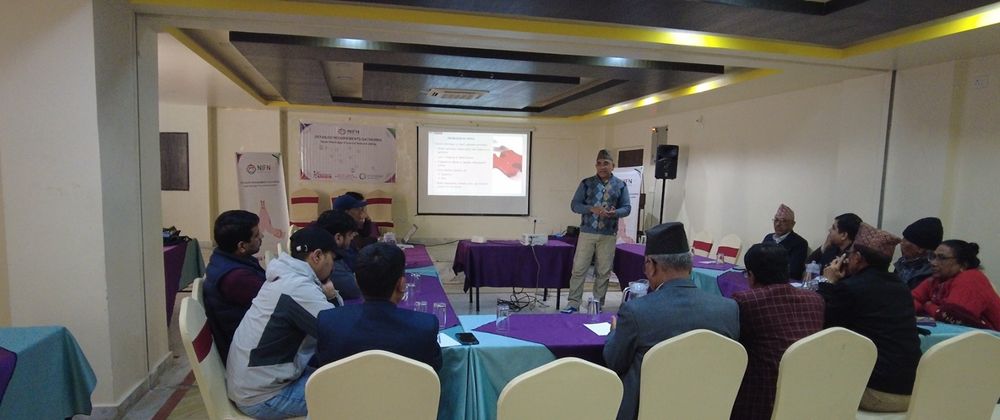
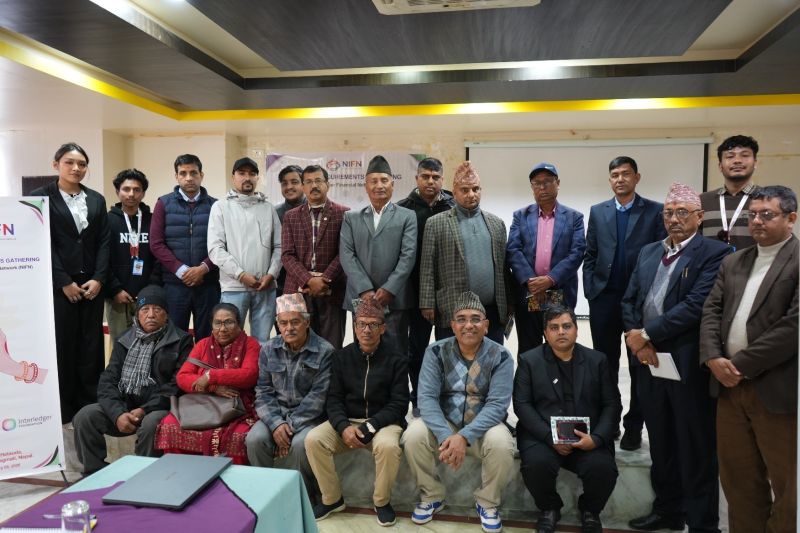
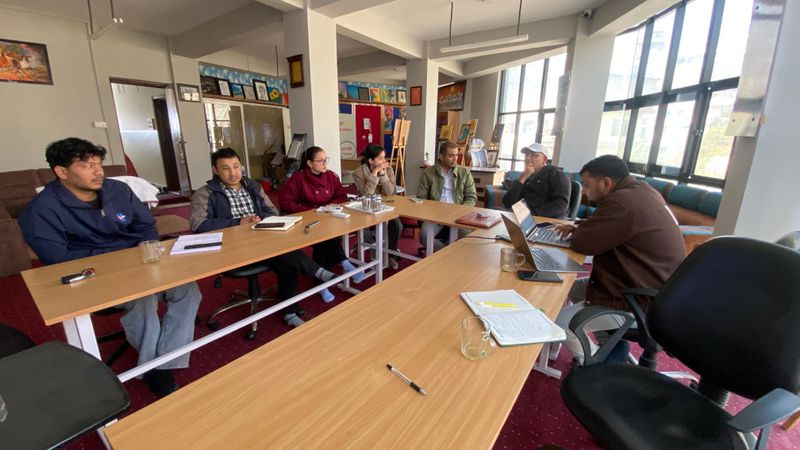
- Training Session 1 – Hetauda, Makawanpur (Ward No. 2, 17–18 April 2026): A two-day field engagement was held at Hotel Samana, Hetauda, combining an orientation program with a Detailed Requirements Gathering (DRG) session. Around 15 representatives from 10 cooperatives participated in focused technical, operational, and compliance discussions, helping to map real operation, system needs, and integration challenges.
- Discussion Session – Chabahil, Kathmandu (Ward No. 7): A community leaders outreach discussion was conducted in the Kathmandu Valley, Ward No. 7, with the ward chairperson targeting cooperative members and financial stakeholders to introduce the NIFN model and its role in enabling interoperable digital payments.
- Stakeholder Engagement – Lalitpur: Direct discussions were held with the leadership of WEAN Cooperative, Mahalaxmi Sthan, Lagankhel, to present the NIFN framework and assess institutional readiness for onboarding.
- Executive-Level Consultations: One-to-one face-to-face meetings were conducted with CEOs, executive directors, board members, and senior managers of target cooperatives. These meetings focused on explaining the NIFN with Interledger protocol value proposition, addressing operational and compliance concerns, and exploring practical pathways for integration.
Overall, these engagements have helped build trust, clarify technical expectations and compliance issues, and strengthen the foundation for upcoming pilot implementation with cooperative and other BFI partners.
Partnerships Established and agreements:
NIFN has made significant progress in formalizing partnerships with cooperatives, BFIs and technology partners, which will serve as the primary participants for the Phase 1 pilot. These engagements are a critical step in building trust and ensuring real-world readiness of the Interledger-based interoperability model. During the Hetauda field visit, as well as subsequent engagements in Kathmandu and Lalitpur, Memorandums of Understanding (MoUs) were actively pursued with cooperative stakeholders to formalize their commitment to the NIFN network and its shared vision of interoperable digital finance.
Nepal Internet Foundation operates NIFN as a neutral, non-commercial initiative, ensuring that all partnerships align with national digital transformation priorities. This includes alignment with the Digital Nepal Framework and Nepal’s Financial Inclusion Roadmap. The approach emphasizes collaboration, transparency, and long-term sustainability, positioning cooperatives as active partners in building an inclusive and interoperable financial ecosystem for Nepal.
| Activity / Milestone | Status | Progress Summary / Notes |
|---|---|---|
| Rafiki ILP API Integration | In Progress | Core integration is underway; ISO 8583 middleware currently being developed to enable interoperability |
| ISO 8583 Middleware Development | In Progress | Message translation layer under development and testing to bridge legacy banking systems with ILP |
| Platform Architecture Finalized | Completed | Cloud-native architecture (Docker & Kubernetes) finalized and approved for deployment |
| Community Orientation — Hetauda | Completed | Engagement with 10 cooperatives (~20 participants); Digital Readiness & Governance (DRG) session conducted |
| Community Outreach — Chabahil, Kathmandu | Completed | Awareness and onboarding session conducted with local cooperative stakeholders |
| Community Outreach — WEAN Cooperative, Lalitpur | Completed | Executive-level stakeholder engagement successfully completed |
| MoU Negotiations with Cooperatives | In Progress | 13 cooperatives across Hetauda, Kathmandu, and Lalitpur engaged; agreements in finalization stage |
| Executive-level Stakeholder Meetings | Completed | Meetings conducted with CEOs, Board Members, and Senior Management |
| Team Mobilization (10 staff + 2 consultants) | Completed | Full project team operational since late January 2026 |
| Project Website Launched | Completed | Official website launched and publicly accessible |
Communications and Marketing
During this initial implementation phase, NIFN has taken a focused and relationship-driven approach to communications, prioritizing trust-building and technical clarity over strong partnership. The team has intentionally avoided major public announcements at this stage, as the project is still in development and undergoing internal SIT and UAT and pilot preparation with cooperators and partners.
Instead, communication efforts have been centered on direct engagement with stakeholders, including cooperatives, financial institutions, and technical partners. These interactions have focused on explaining the Interledger-based model, addressing operational concerns, and ensuring a clear understanding of the system before public rollout.
As part of foundational communication infrastructure, the official NIFN website has been developed to provide a central information hub about the project, its objectives, and its progress. This will serve as the primary platform for future outreach and public communication.
Looking ahead, NIFN plans to transition into a broader communications and marketing phase after successful completion of pilot testing. A “big bang” launch strategy will be implemented at that stage to publicly showcase the results, scale awareness, and support wider adoption across Nepal’s cooperative and financial ecosystem.
What’s Next?
For the next phase of implementation, the NIFN team will focus on completing core system development and conducting system integrations test (SIT) with in a controlled live pilot. This stage is critical in moving from technical validation to real-world usage with cooperative partners, in line with the approved grant work plan.
Key Planned Activities
- Complete full setup and configuration of the ILP integration environment, including the Rafiki stack and ISO 8583 middleware.
- Finalize middleware translator logic and ensure full ISO 8583 compliance across all test scenarios.
- Execute Proof of Concept (POC) for end-to-end ILP-based transactions between ILP (NIFN), a wallet, and a cooperative in a controlled environment.
- Conduct System Integration Testing (SIT) to validate interoperability, data integrity, and compliance across all system components.
- Carry out User Acceptance Testing (UAT) with cooperative partners to gather feedback from real operational scenarios
- Complete onboarding preparations and technical integration mapping for all MOUs signed cooperatives.
- Technical and operational training will be provided to cooperative staff, along with user guidelines, SOPs, and onboarding documentation to ensure sustainable operations.
- Strengthen coordination with additional cooperatives to assess system compatibility and prepare onboarding pipelines.
- Finalize the teller-facing user interface to ensure readiness for real-user testing and operational use.
- Launch the controlled live pilot, enabling cooperative staff to conduct real inter-cooperative transfer transactions within a monitored environment.
- Continue strategic engagement with coperatives, BFIs, and Nepal Rastra Bank (NRB) to strengthen regulatory alignment and expand the partner ecosystem.
- Establish key performance indicators (KPIs) and monitoring dashboards to track transaction volume, system uptime, and adoption metrics. Collect feedback from pilot participants to make iterative improvements to the platform.
- To prepare for scaling NIFN to more cooperatives and financial institutions, develop a roadmap that encompasses discussions on long-term sustainability, governance, and additional funding models beyond the pilot phase. The next phase will move from development to real-world deployment and validation, ensuring that NIFN becomes a production-ready interoperable payment network capable of scaling across Nepal’s financial ecosystem.
Community Support
As NIFN moves closer to pilot implementation, we deeply value collaboration, shared learning, and ecosystem support that can help strengthen both the technical system and its real-world adoption.
Rafiki Technical Troubleshooting:
We are currently finalizing our ISO 8583 mapping and would greatly appreciate opportunities to connect with peers who have experience integrating Rafiki with high-availability financial messaging systems. In particular, having a sounding board to discuss edge cases in transaction states, failure handling, and reconciliation flows would be extremely helpful as we refine system reliability and robustness.
Networking for Scalability:
We are actively looking to connect with organizations, fintechs, and infrastructure partners who are working on grassroots financial inclusion and interoperable payment systems. If there are opportunities to present our middleware architecture and pilot approach to a wider audience, we would greatly appreciate introductions that can help us explore scalability beyond the initial pilot phase.
Knowledge Sharing & Peer Learning:
We are always eager to learn from others in the ecosystem. If you have worked on interoperability, cooperative financial systems, or digital payment infrastructure, we would value the opportunity to exchange insights and learn from experience. Practical lessons on simplifying financial data exchange and improving system interoperability would be especially useful.
Post-Pilot Outreach & Global Visibility:
Once the pilot phase is successfully completed, we plan to move into a broader communication and outreach phase, including global promotion of the model. At that stage, we aim to share learnings, technical outcomes, and impact stories internationally to encourage adoption of interoperable financial systems in other regions facing similar challenges.
Overall, any guidance, collaboration, or connection will play an important role in helping NIFN grow from a national pilot into a scalable, globally relevant model for inclusive digital finance.
Additional Comments
NIFN project is progressing steadily and remains on track with its planned timeline. While still in the development and pre-deployment stage, strong foundations have been built both technically and through partnerships with cooperatives.
A key highlight has been the trust developed with cooperative institutions. Their willingness to engage, sign MoUs, and actively participate reflects growing confidence in the NIFN approach. At the same time, the technical team has continued refining the system based on real-world feedback, ensuring it is practical, secure, and aligned with the needs of Nepal’s financial ecosystem.
In the coming phase, the focus will be on completing integration and delivering a successful pilot. NIFN remains committed to building an inclusive and interoperable financial network that creates meaningful impact for communities across Nepal.
Relevant Links/Resources (optional)
Nepal Internet Foundation: https://www.nif.org.np
Nepal Interledger Financial Network: https://nifn.nif.org.np/



Top comments (0)