

Meet the Team
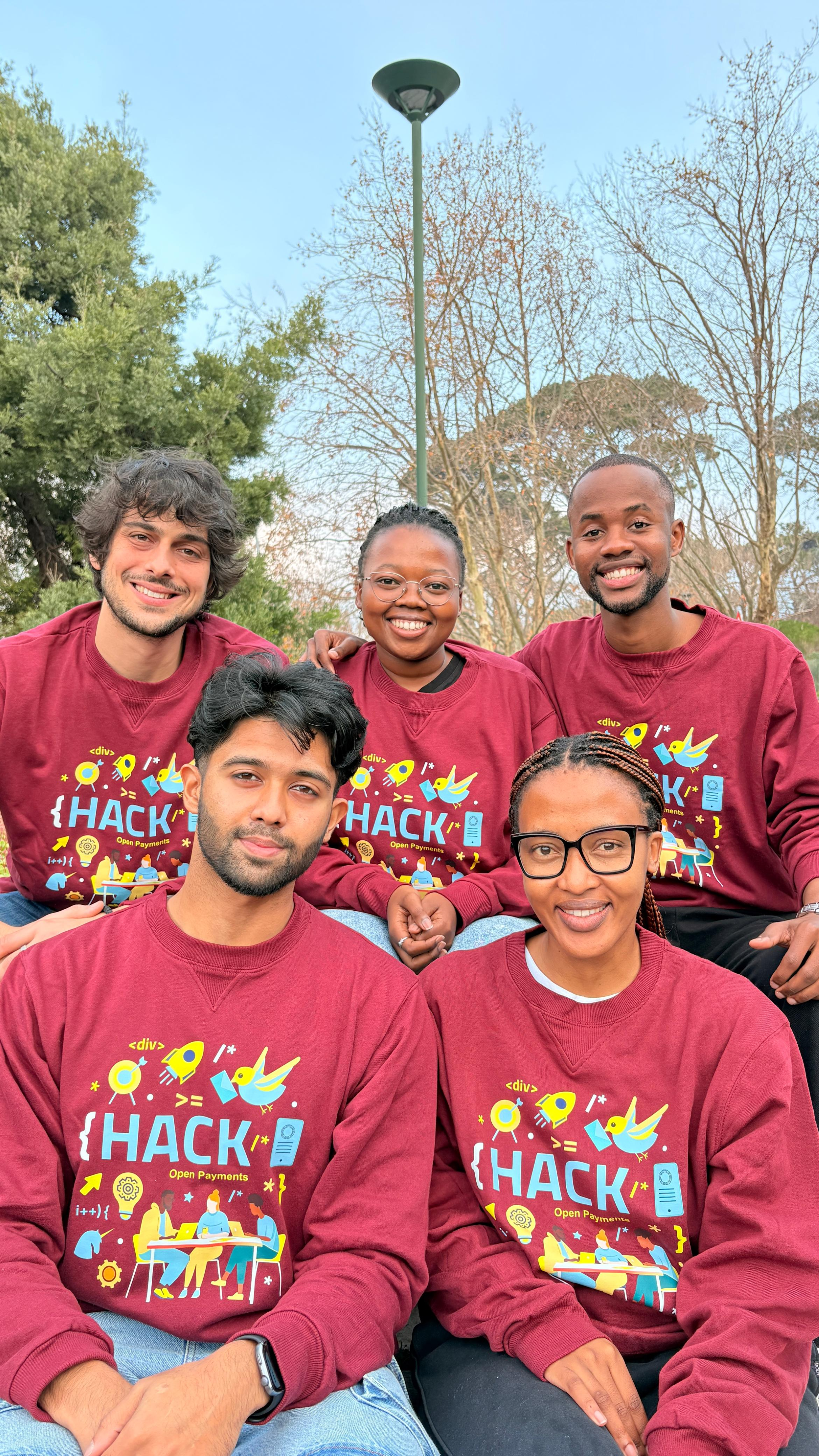
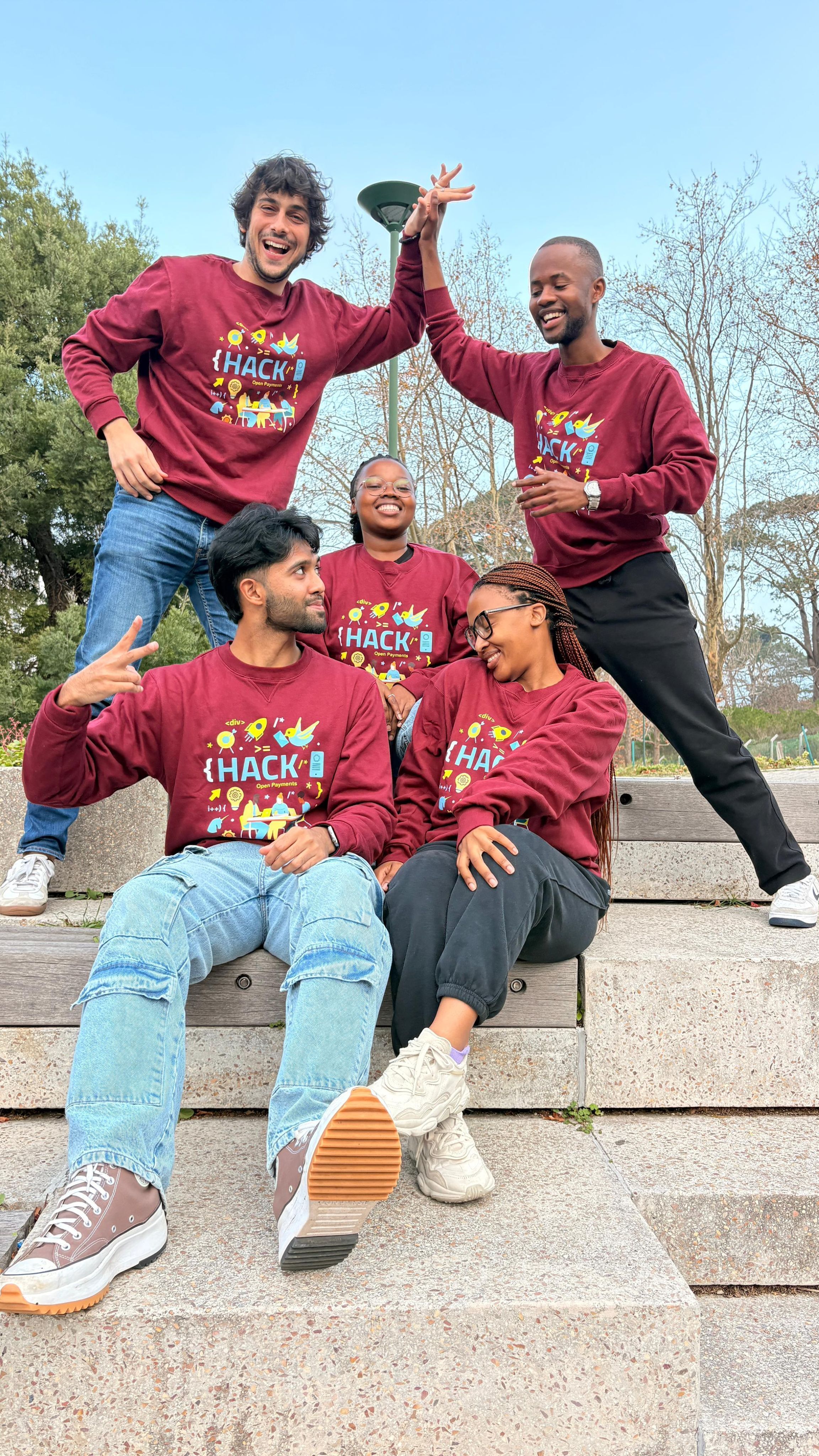
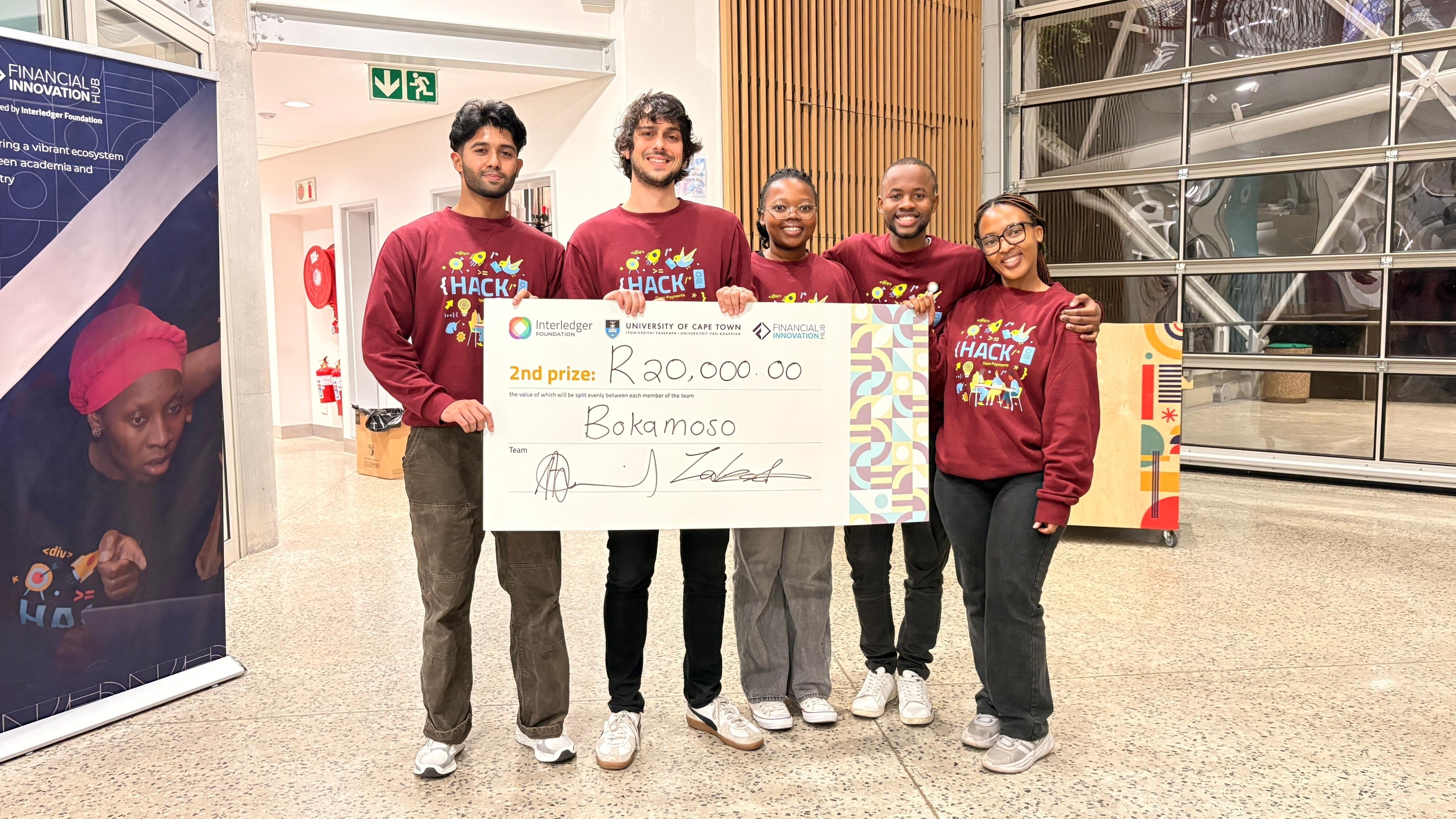
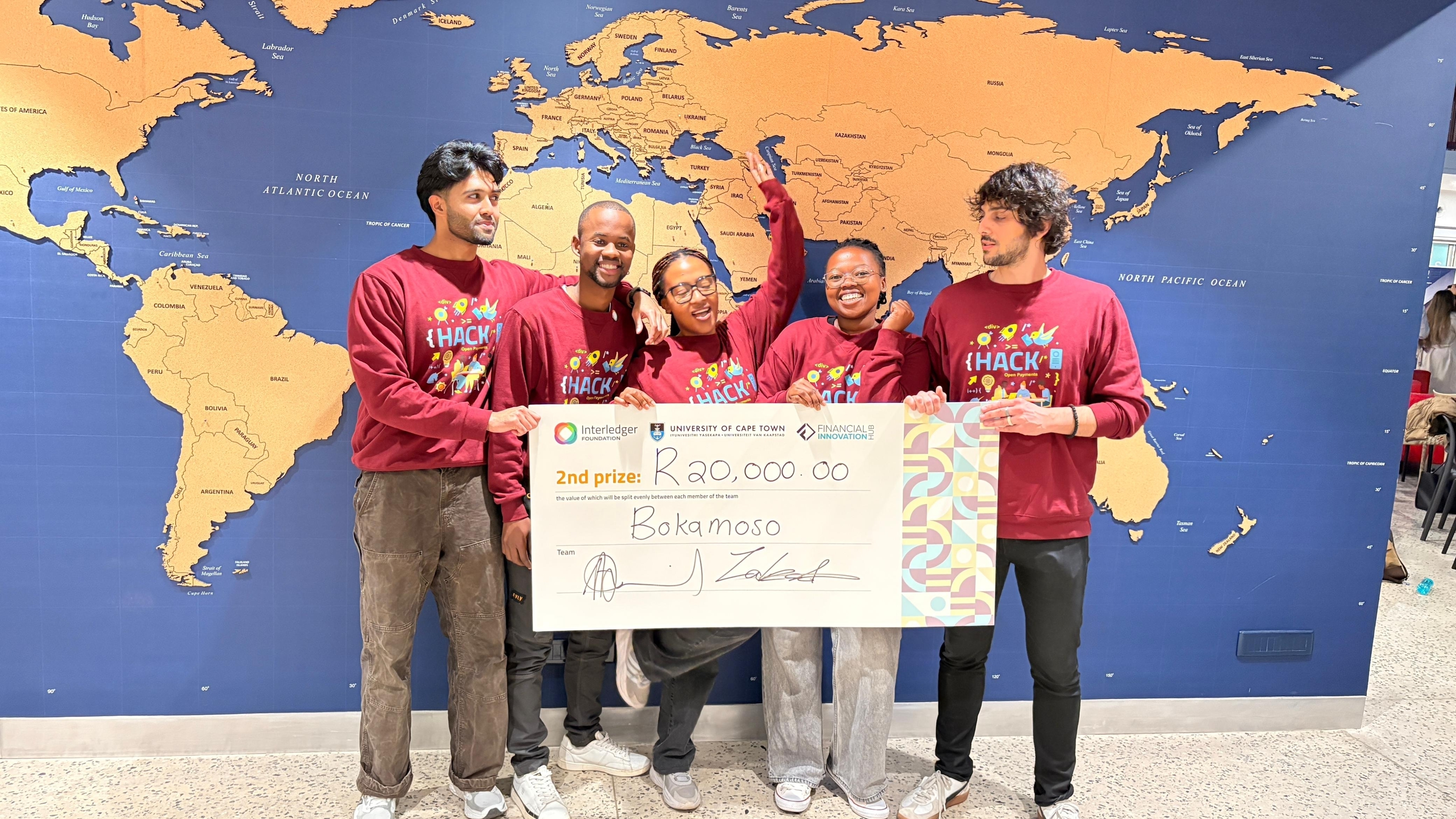
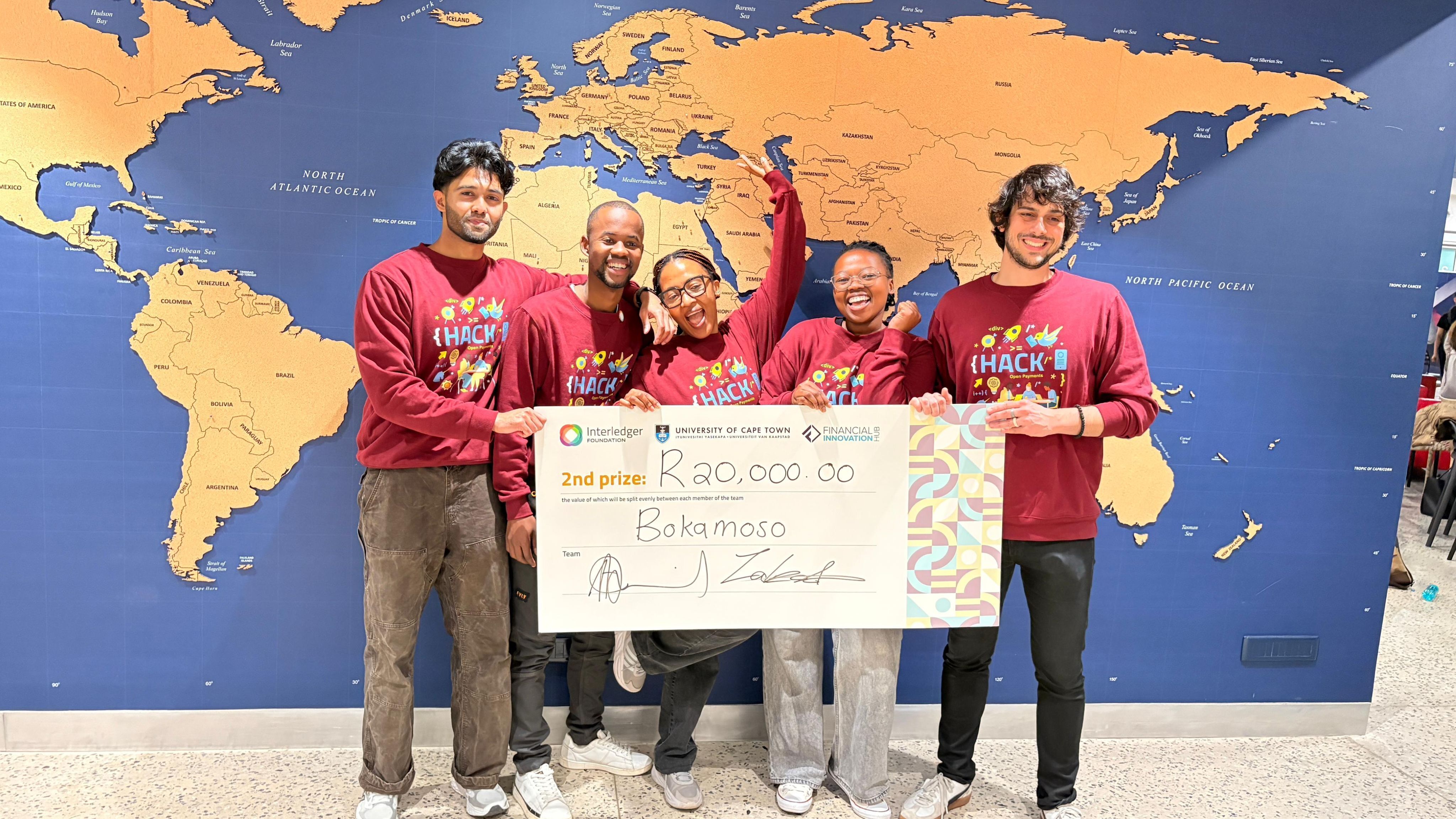
Nikola Milosavljevic (top left), Annita Ngoma (top middle), Ndumiso Zondi (top right) , Raibim Alam (bottom left) and Realeboha Motlamelle (bottom right). We are current MPhil students in Financial Technology at the University of Cape Town.
Fun fact : we all like milk.
Our Hackathon Background
For some of our team this was a first hackathon; others had competed before. What we share is enjoying the work of coming together as a team, identifying a real-world problem, and building toward a solution against a tight clock.
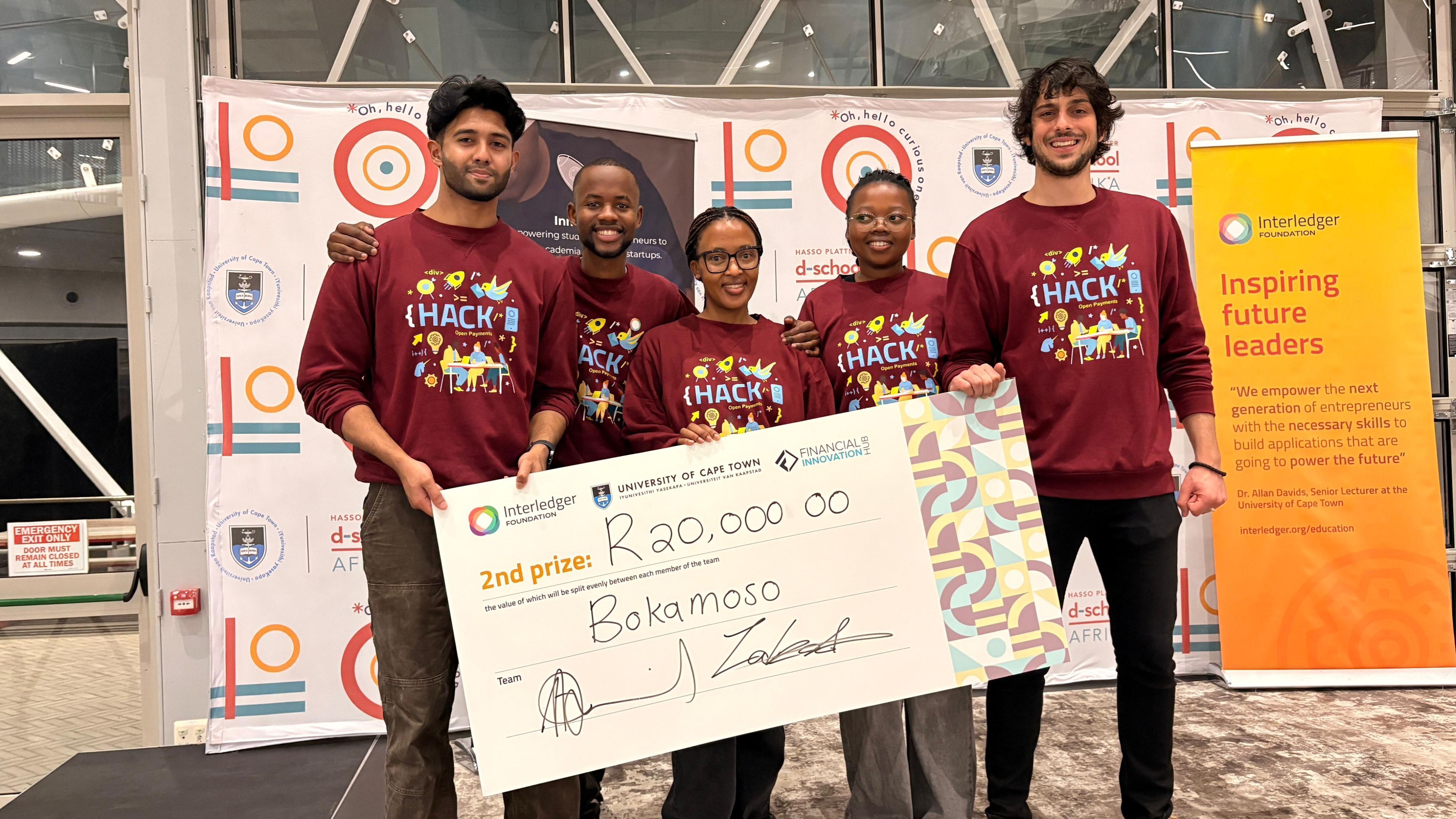
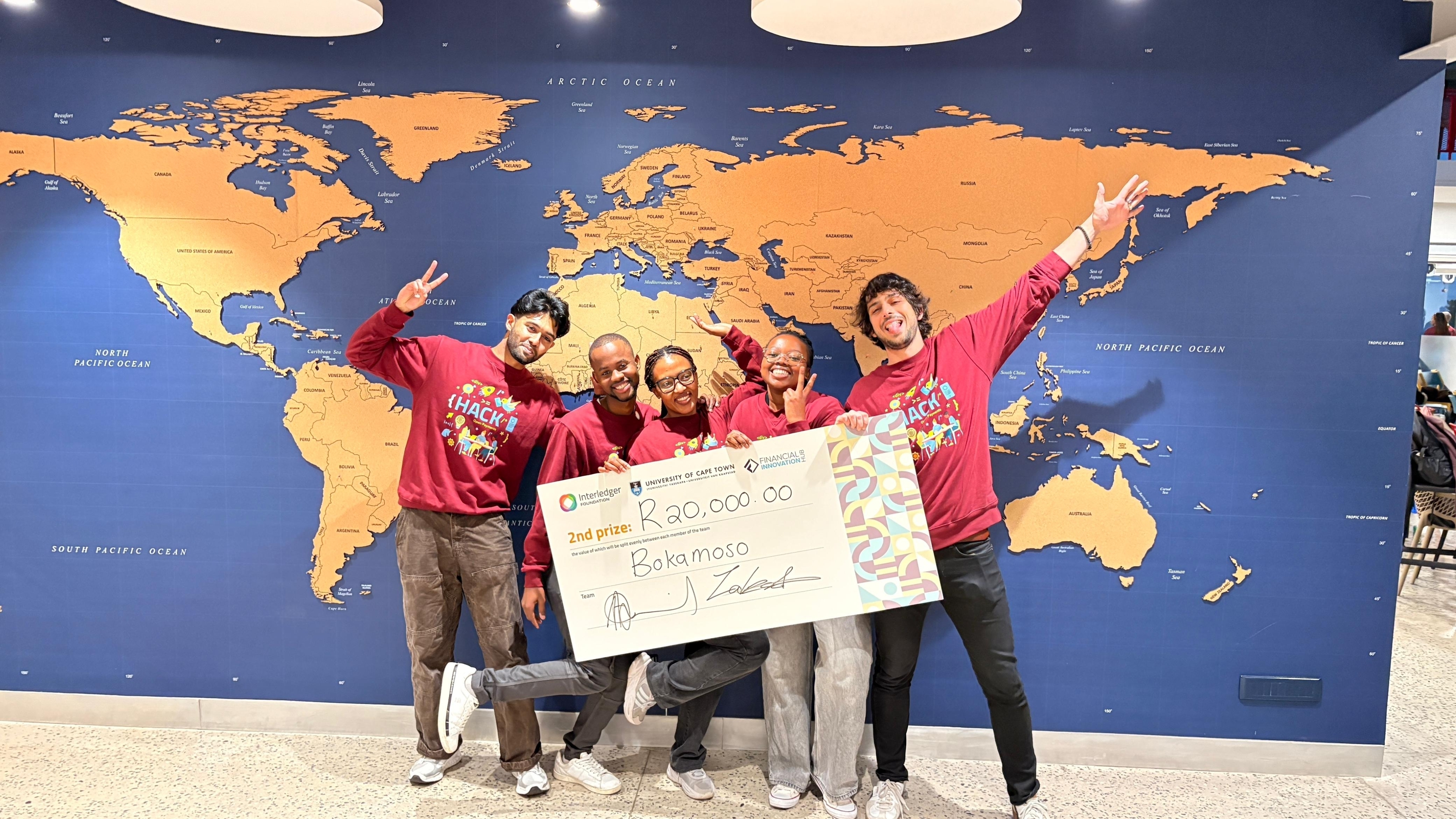
What stood out most was watching a concept turn into a functioning product. Having that effort recognised with second place was incredibly rewarding, and it reinforced the value of rapid experimentation, teamwork, and building for real-world challenges.
The format also felt familiar: it closely mirrored our Financial Software Engineering class at university. So even for the first-timers among us, nothing felt completely alien and our MPhil background helped us converge on a solution quickly.
Preparation
Before the hackathon, we participated in a series of lectures and hands-on workshops that laid the foundation for our project. The Interledger Foundation introduced us to the Open Payments protocol and its core concepts, while Dr. Allan Davids provided valuable insights into the evolution of money, how payments move through financial systems, and the future of digital payments. We also attended technical tutorial sessions with Marc Levin (who also tutors our FSE classes), where we gained practical experience working with the Open Payments ecosystem.
Beyond the workshops, we researched embedded finance and explored the financial inclusion challenges facing South Africa, particularly the barriers that prevent informal workers from accessing traditional retirement savings products. These sessions and our research helped us identify a real-world problem that aligned with the capabilities of Open Payments and ultimately inspired the development of Rank Save.
What We Learnt
The hackathon taught us that building on an open standard requires understanding both its possibilities and its constraints. We learned how the Open Payments protocol enables secure, consent-based, interoperable payments and how recurring grants can be used to automate micro-investments after a single user authorization.
The Challenge
We tackled the challenge of making retirement savings accessible to South Africa's informal workforce. The country's retirement savings system is built around stable employment, regular salaries, and fixed debit order dates, leaving millions of gig workers, casual labourers, street vendors, and unemployed individuals without a practical way to save consistently for retirement.
This problem resonated with us on a personal level. One of our teammates watched her grandmother reach retirement without savings and become financially dependent on her mother, who also had limited opportunities to save for retirement. She wanted to break that cycle, inspiring us to ask how technology could make long-term savings more inclusive for people with irregular incomes.
Our Solution
Rank Save is a mobile-first micro-investing application designed to make retirement savings accessible to South Africa's informal workforce. Millions of gig workers, domestic workers, street vendors, and small business owners are excluded from traditional retirement products because they don't have fixed salaries or employer-sponsored pension schemes.
Our solution turns spending into saving. Users choose a savings rate of 1%, 3%, or 6% (6% by default), and every qualifying purchase made through an Open Payments-enabled checkout automatically triggers a micro-investment into their retirement savings fund. Instead of relying on fixed monthly debit orders, savings grow naturally alongside everyday spending, making it possible for people with irregular incomes to build long-term financial security.
We built Rank Save on Interledger's Open Payments protocol, using it as the core of our architecture rather than simply as a payment method. We implemented recurring outgoing-payment grants, allowing users to provide consent once and then automate future contributions within a predefined monthly limit. Our application monitors qualifying Open Payments transactions using a read-scoped grant, calculates the configured savings percentage, creates an Incoming Payment, generates a Quote, and executes an Outgoing Payment to the user's retirement fund through the Open Payments API.
To develop and validate the solution, we used the wallet.interledger-test.dev environment to simulate wallets, transactions, and end-to-end payment flows. This allowed us to demonstrate a complete working prototype, showing how interoperable payments can power automated micro-investing without requiring users to take any additional action after their initial setup.
To encourage long-term saving, Rank Save also provides users with a dashboard showing their contribution history, current balance, and a projected retirement value based on consistent saving. Our goal is simple: set your savings percentage once, spend as you normally would, and let your retirement savings grow automatically in the background.
Mentorship
A challenge we faced was implementing the recurring payment flow correctly. We needed to understand how recurring grants, quotes, incoming payments, and outgoing payments fit together to enable automated micro-investing while keeping the user in control through a single consent flow.
The mentors were invaluable throughout this process. They encouraged us to validate our assumptions against the Open Payments specification instead of designing around ideal scenarios. Their guidance helped us simplify our architecture, narrow our MVP to something technically achievable, and use the protocol in the way it was intended rather than forcing it to fit our idea.
What's Next?
We are still evaluating whether to continue developing this idea or pivot to another concept that was also shortlisted amongst the staff during the hackathon.







Top comments (0)