
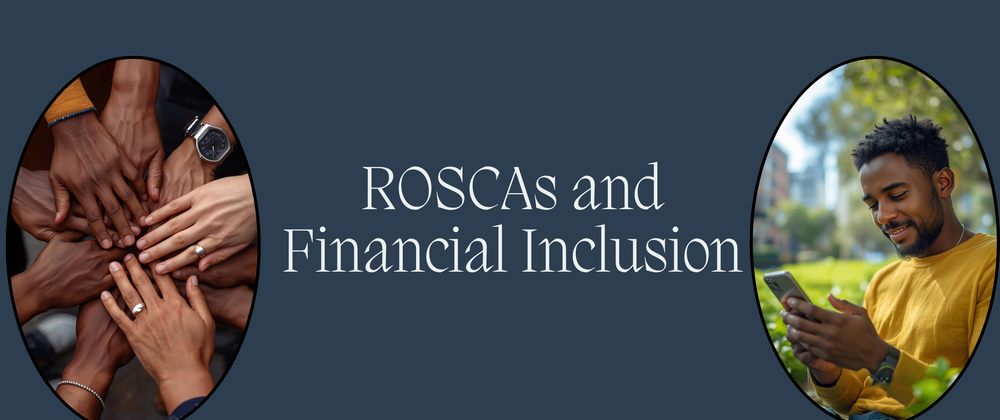

Sometimes, at the end of a frustrating week, all I want is for money to work simply.
Not to fail me.
Not to be stolen online.
Not to disappear with a digital hiccup or card-swallowing ATM.
Not to have to wait an hour on hold with a chatbot.
Just… work.
All the above happened to me in the same week.
First world problem? Yes. The truth is that countless people around the world don't even have the chance of being disappointed by digital banking; they're locked out from the start.
I find myself reflecting on the resilience of traditional systems. In communities that identify culturally with the Caribbean and across the African continent, a system has existed long before apps and two-factor authentication.
WHAT'S A ROSCA?
ROSCA stands for Rotating Savings and Credit Association. It's not just about money. It's about trust, cooperation, and survival.
Imagine a small group, family, friends, neighbours, committed to saving together. Each month (or week), everyone puts in a set amount of money, and then one person takes home the whole pot. Next cycle, someone else gets the payout.
This rotation continues until everyone has received their share. It's built on trust, mutual knowledge, and often, necessity. ROSCAs thrive where "formal" banking is hard to access: No contracts. No interest rates. Just trust.
Globally, studies show that many communities in some countries participate in ROSCAs. They're known as pardna (Jamaica), susu (Nigeria), chamas (Kenya), tandas (Mexico), and by many other names. They thrive in places where formal banking fails or simply doesn't exist.
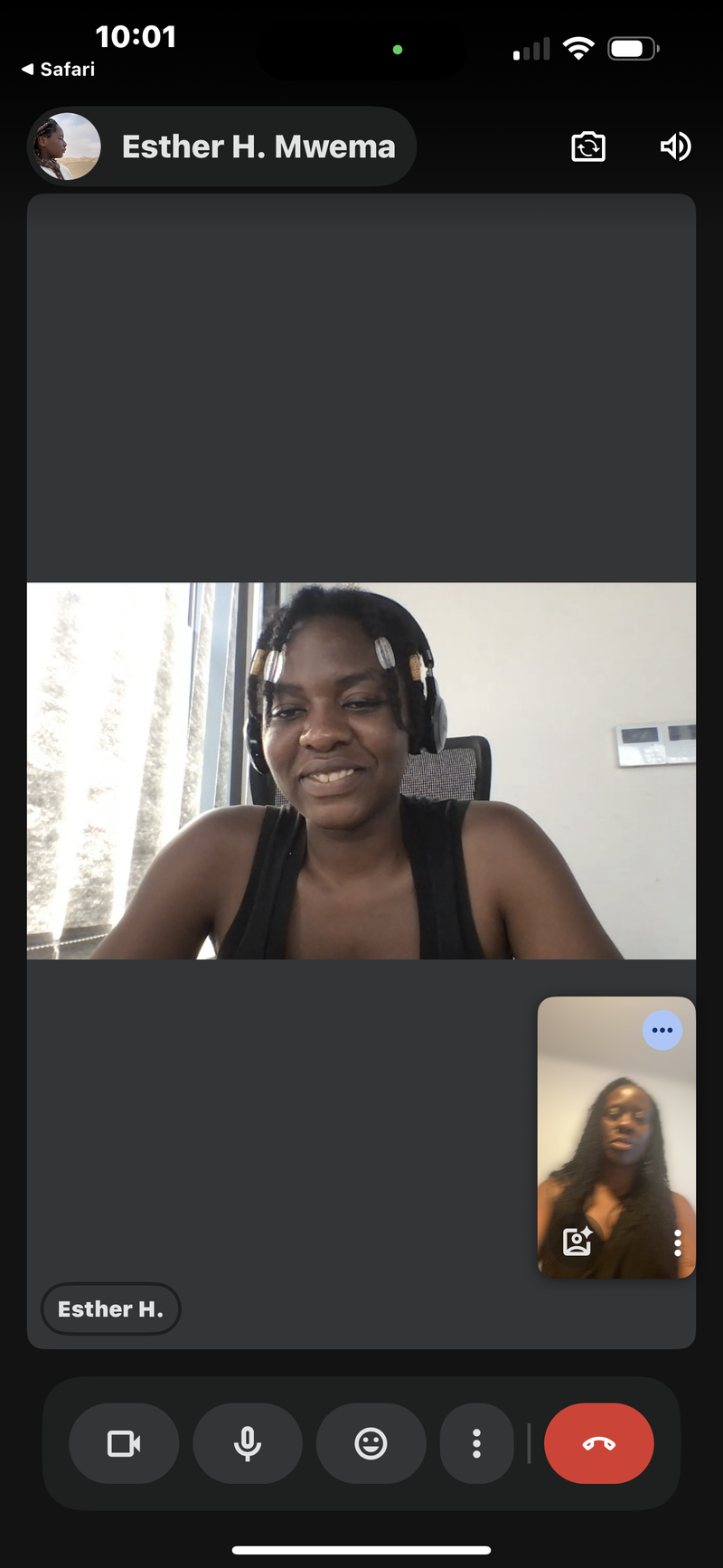
I had a chance to speak with Esther Mwvaema from Sikhula Sonke: Living Archives of Afrofuturist Village Banking. https://www.sikhulasonke.net/
Esther is an artist and expert in internet governance, digital inequalities, and innovation.
She confirmed that what has been happening in African countries is no different than what has been happening across the Caribbean and in several countries around the world. Women, using informal banking/village banking to support their families and businesses and contribute to the local economy.
Through her work with Sikhula Sonke, she documented living archives of village banking across Southern Africa and witnessed what the financial industry has consistently failed to see. Women have never needed banks to build wealth; they've been creating their own inclusive financial systems for generations.
What's happened in Africa, in the Caribbean, and with families around the world is no different than what I've observed in my own family.
Should we call these informal or alternative systems? They’re really quite sophisticated financial systems that women have designed to meet their financial needs.
These village banking groups operate with their own constitutions, governance structures, and definitions of creditworthiness rooted in community accountability rather than colonial banking frameworks.
SOCIAL CAPITAL AS INFRASTRUCTURE
The power of a ROSCA isn’t in its financial mechanics; it's in its social foundation. There are no customer service numbers to call or passwords to reset. What keeps it going is social capital. Trust. Reciprocity. Cultural norms of accountability.
In Toronto, women from the African and Caribbean diaspora continue ROSCA traditions not only to manage finances but also as a quiet form of resistance to systems that ignore or exclude them. The same goes for groups, primarily led by women worldwide. What if these women had ROSCA members in other parts of the world? What if they could easily send and receive money in their currency to other members anywhere in the world?
WHEN INFORMAL MEETS DIGITAL
But can this social system survive the digital age? That's the question I keep asking—especially after my own recent digital finance disaster.
Digitizing ROSCAs is an attractive goal. Mobile wallets, apps, digital ledgers—it all sounds modern and scalable. This is where the Interledger Protocol can bring something interesting to the table.
INTERLEDGER: A PROTOCOL ROOTED IN POSSIBILITY
The Interledger Protocol (ILP) allows payments to move across different networks.
Here's why Interledger matters for ROSCAs:
Cross-border connectivity: Diaspora members could contribute to ROSCAs back home with minimal fees and in local currencies.
Interoperability: ROSCA members can use different financial services while still participating in a shared system.
Some days, especially after a faceless ATM eats my card, I think about how my Grandmother used to save money. What could happen if ROSCA users in Jamaica, Ghana, and Toronto could all participate in a shared financial circle, sending and receiving funds across borders seamlessly, securely, and on their own terms?
With open protocols like Interledger, we have a chance to build that future. A future where ROSCAs can connect across borders without high fees and where diaspora communities can contribute to savings groups back home in real time.


Top comments (2)
This is an interesting thought — digitizing chamas (as they call them in Kenya). I first learned of chamas while living in Nairobi, Kenya (for fintech consulting) and speaking with friends I made along the journey about ways that their mothers and grandmothers saved money.
Chama networks had an elegance to their design, but were simple and full of trust. Given modern-day families are often spread out — due to globalization and relocation to new markets for greater opportunity — having access to digital chamas that are frictionless and liquid across desired markets would be empowering.
Thanks for this share, Andria.
Thank you for submitting your final report, It was an interesting reas!
It was a pleasure having you as one of the 2025 Interledger Ambassadors.