


Brief Project Description
The BessPay Plugin integrates Interledger Open Payments into Sharetribe, a leading global marketplace platform, to deliver easier, cheaper, and faster cross-border transactions for emerging markets. Built over twelve months under the ILF Digital Financial Services Grant (April 2025 - March 2026), this solution is specifically engineered to operate within the unique economic and technical constraints of the Global South. It gives MSMEs the infrastructure to launch two-sided digital marketplaces and receive funds directly into their own Interledger-compliant wallets, bypassing the prohibitive fees and traditional gateway barriers that have historically hindered them from global trade.
Please see our previous progress report here: (https://community.interledger.org/besspaysocial/besspay-2nd-ilf-interim-report-narrative-49ch)
Project Update
What We Set Out to Build and Why
We set out to solve a critical bottleneck for entrepreneurs in emerging markets: accessing and maintaining accounts with leading international payment platforms. Stripe, the default payment processor for Sharetribe, works in 11 of the 146 developing countries our target users operate in. PayPal covers more geography, but its high fees and slow withdrawal cycles undermine the economics of micro-businesses. The result is a large population of capable, digitally active entrepreneurs across the Global South who cannot properly participate in global digital commerce, not because they lack skills or products, but because the payment rails were never built for them.
BessPay has built a plugin that connects any Sharetribe marketplace to the Interledger Open Payments network. The solution is simple, cost-effective and efficient. A marketplace operator installs BessPay, connects their preferred Interledger-compliant wallet, and their sellers can immediately receive payments directly into their own wallets, with automatic fee-splitting, full transaction history, and no dependency on Stripe or PayPal.
Our Development Journey
April - July 2025:
Market research, system architecture, and early development. We designed the system around Chimoney's API as the primary integration layer. This was a practical choice; Chimoney gave us a fast path to MVP and a known integration partner. The architectural diagrams, database design, and API scaffolding were all completed on schedule.
August 2025:
ILF technical check-ins surfaced a significant problem. The ILF technical team reviewed our architecture and pointed out that our backend was acting as a proxy layer over Open Payments endpoints that are explicitly designed to be public-facing. More fundamentally, by routing everything through Chimoney's API, we were building a closed system rather than a true Open Payments client.
September 2025:
We submitted a formal scope change and committed to a full architectural rebuild. The new design uses the official Interledger Open Payments TypeScript/Node SDK only. Funds route directly between Interledger Account Servicing Entities (ASEs). BessPay handles orchestration only; it never holds custodial funds. Marketplace owners, sellers and buyers can connect any Interledger-compliant wallet (Chimoney, Interledger Wallet, Gatehub etc.) through the Marketplace Owner Dashboard or directly on the Sharetribe Marketplace.
September-October 2025 (The Five-Week Sprint):
To execute this intensive rebuild, we expanded our engineering capacity by onboarding a Technical Lead with over 20 years of fintech experience and an additional full-stack developer. In parallel, Sharetribe's premier integration partner, Journey Horizon, dedicated a project manager and three full-stack engineers to the integration.
This combined effort successfully delivered the wallet-agnostic BessPay Plugin API, engineered with secure, server-side orchestration to guarantee sensitive credentials are never exposed to the browser. Alongside the API, we developed a Next.js Marketplace Owner Dashboard, empowering operators to easily configure their ASE wallets, manage fee splits, and oversee transaction analytics.
To ensure stability on a compressed timeline, the team implemented automated CI/CD pipelines via GitHub Actions and achieved a flawless 100% line and function test coverage for the critical payments service module. This rigorous QA process yielded a 96% transaction success rate in the staging environment, with an average end-to-end processing duration of just 28 seconds. Ultimately, Journey Horizon integrated this hardened API into a dedicated Sharetribe instance, delivering a fully operational marketplace powered by Open Payments.
A Lesson in Resilience: Navigating Category 5 Hurricane Melissa
Between late October and November 2025, during our most critical development phase leading up to the Interledger Summit, our team faced an unprecedented external challenge: Category 5 Hurricane Melissa. As the second-largest hurricane in both Jamaica's and the Western Hemisphere's recorded history, the storm's impact was devastating. Our Jamaican team members faced complete communication blackouts, widespread loss of power and water, impassable roads, and in some cases, severe displacement.
Despite these extreme conditions, the team's commitment never wavered. Several displaced members eventually relocated to Kingston specifically to regain connectivity. To ensure we did not miss our critical ILF Summit deliverables, we rapidly reorganized our workflows. Team members based in unaffected islands, specifically Trinidad & Tobago and Barbados, stepped up immediately, assuming additional engineering and operational responsibilities to cover for their Jamaican counterparts.
We want to extend our deepest gratitude to the Interledger Foundation team for their constant communication, empathy, and understanding during this crisis. This period definitively proved that our human collaborative network is just as robust as our technical infrastructure.
November 5-6 2025 (Interledger Summit, Mexico):
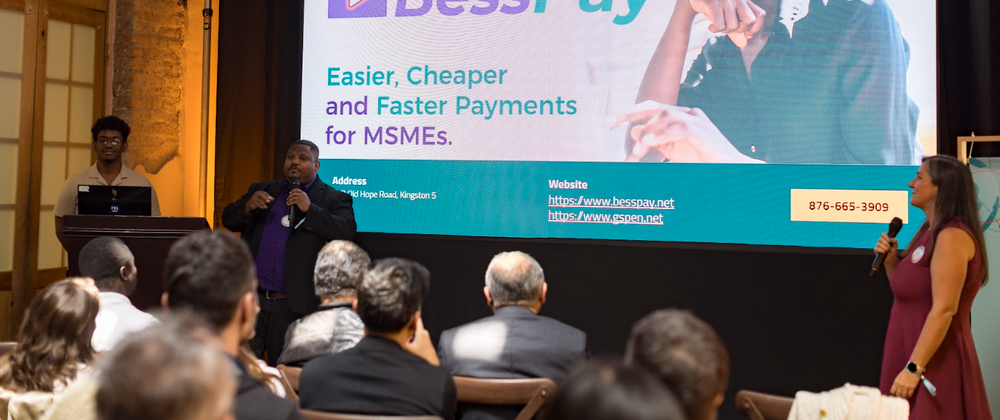
We presented and live-demoed our Sharetribe marketplace integration to the global developer community. Showcasing true cross-wallet operability, the flawless demonstration featured a buyer using a Chimoney wallet successfully purchasing from a merchant using an Interledger Wallet. The BessPay Plugin automatically manages the complex backend processes seamlessly, including quote generation, grant requests, and fee-splitting. Following the successful presentation, we met with the ILF Technical team for an in-depth review of the implementation, gathering critical feedback to shape our post-Summit enhancements.
November 2025(post-Summit)-February 2026:
Following the Summit, the BessPay development team executed a rigorous post-Summit sprint, implementing over 40 user stories and technical updates to further strengthen and enhance the BessPay Platform. This body of work resolved a bug preventing seller accounts from making purchases, added a Transaction Detail Modal, a transaction emailing system, a Merchant Performance Module, and multi-currency dynamic quoting via the Open Payments Quote feature. These backend enhancements required corresponding updates to the Sharetribe frontend integration, which were scoped for Journey Horizon to implement following the completion of our API work. However, the volume and pace of enhancements delivered during this sprint, combined with time and resource constraints at the close of the grant cycle, meant the frontend updates could not be completed within the funded period. The frontend integration remains stable at its pre-sprint state and the pending updates are the primary focus of our immediate next phase of work with Journey Horizon.
March 2026:
Code freeze implemented. All engineering effort focused on security updates and CI/CD. The backend is stable. The frontend Sharetribe integration has blockers in the seller onboarding and checkout flows that need to be resolved before production launch.
Where We Are Now
The BessPay API is fully functional, as proven by the successful live cross-wallet transactions at the ILF Summit. However, finalizing the production-ready user journey remains our immediate priority. Specifically, the seller onboarding and checkout flows on the Sharetribe front-end must be updated to seamlessly align with the related Seller API enhancements implemented post-Summit.
Project Impact & Target Audience(s)
Our target users are the economic engine of the Global South: the over 400 million Micro, Small, and Medium-sized Enterprises (MSMEs), freelancers, and independent creators driving regional economies, employing over 70% of the workforce and contributing up to 35% of GDP in their countries.
We place a specific, strategic focus on empowering women and youth across the Caribbean, Latin America, and Africa, alongside their digitally fluent global diasporas.
These are capable entrepreneurs already operating active businesses, often leveraging channels like WhatsApp and personal websites. However, their potential for scale is hindered by a massive finance gap and a systemic barrier: traditional gateways like Stripe exclude most developing nations, making the collection of cross-border payments costly, frustrating, and time-consuming. Our pilot research overwhelmingly validated these systemic pain points.
BessPay bridges this divide by providing a seamless Open Payments integration. By bypassing geographic restrictions and prohibitive fees, we unlock access to modern financial rails, enabling historically marginalized communities to finally participate in, and benefit from, a multi-trillion-dollar global digital economy.
What the Pilot Research Found
We conducted an initial pilot study engaging 15 participants: 10 sellers, 4 buyers, and 1 marketplace operator, across the Caribbean, Africa, and Asia. While this is a small group and the results are directional rather than definitive, what they told us maps perfectly to the problem we set out to solve.
From sellers:
Payment delays and high fees were universal pain points. One seller in Jamaica summarized what would make digital commerce viable: "Integration with local banks, cash out to local bank account." Another in Nigeria was direct about the urgency: "We consult with service businesses and we need payment integration platforms urgently." Both confirmed they would be willing to test BessPay, noting that fast payouts would be the primary driver of adoption.
From buyers:
The open-ended feedback was clear: "Digital payment could very much improve online shopping if the risk of fraud and many uncertainties associated with digital transactions are addressed properly." Buyers listed fraud/scams and the lack of refund options as their top concerns, and stated they would be open to trying BessPay if it introduced these trust and safety layers.
From the marketplace operator:
Despite listing Stripe as a known provider, they indicated they do not currently have a functioning digital payment integration. Their top challenges were technical integration difficulties, KYC/AML compliance, and a lack of cross-border capabilities. When asked what additional input they'd like to share, their response was immediate: "I need a meeting with you guys." They emphasized that seamless Sharetribe integration was "critical" and indicated a strong interest in piloting BessPay.
These responses confirm our product-market fit hypothesis: the pain is real, the willingness to try something better is there, and the trust and compliance challenges our research identified are genuine. A broader survey of 100 sellers, 100 buyers, and 20 marketplace operators is currently in progress across the Caribbean, Central America and Africa, with results to be published ahead of our production launch.
Additionally, our inaugural Caribbean Creators Expo (CCE 2025, funded by UNESCO), held July 26, 2025, drew 850 attendees, showcased 37 creative entrepreneurs, and reached 1.54 million people on social media. The "Getting Paid Global" session at CCE introduced Interledger Open Payments directly to Caribbean creators. The Jamaica Business Development Corporation (JBDC) subsequently issued a formal letter of support for the upcoming expanded Caribbean and Africa Creators Expo 2027 (CACE).
Progress on Objectives, Key Activities

Objective 1: Research and Escrow Architecture
We successfully completed an initial pilot encompassing six countries, engaging sellers, a buyer, and a marketplace operator, and a broader 100-respondent survey is currently in progress. The pilot research overwhelmingly validated the core problem across these three specific user types and confirmed the pattern that shaped our architecture: sellers need speed and cross-border access, buyers need trust infrastructure, and marketplace operators need plug-and-play simplicity. The marketplace operator's comment, "I need a meeting with you guys," captures something important: there is genuine, active demand from operators who cannot yet find workable payment solutions.
Concurrently, our objective to build a basic escrow service was intentionally deferred from active development to pure research. This strategic pause allowed us to thoroughly evaluate three distinct escrow models (Same account < general sub-account < per-transaction sub-account), identify per-transaction sub-accounts as our optimal long-term architecture, and produce a concrete regulatory roadmap. This deep-dive work directly shaped our legal planning, ensuring our technical architecture aligns perfectly with future compliance requirements for Caribbean jurisdictions.
(Status: Partially met, pilot complete, broader survey in progress, escrow deferred to Post-launch phase.)
Objective 2: Core Technical Architecture, API Integration, and Performance
The pivot to exclusively using the Open Payments SDK was the defining technical event of this grant. Pivoting away from a direct Chimoney API integration, we completely rebuilt the system as a wallet-agnostic Open Payments client using the official SDK.
To ensure high performance and scalability, the final system runs on Bun/Elysia with PostgreSQL on Google Cloud Run, containerized via Docker. For financial security, the resulting backend boasts multi-ASE support and strictly enforces double-entry bookkeeping principles, ensuring all state transitions are ACID-compliant.
To empower operators, we delivered a fully functional Marketplace Owner Dashboard equipped with an ASE wallet connector, configurable fee splits, a drag-and-drop layout, a Transaction Detail Modal, a Merchant Performance Module, and multi-language support. Furthermore, we fully implemented automated, programmatic fee-splitting across the seller, marketplace owner, and platform. This included introducing multi-currency dynamic quoting via the Open Payments Quote feature, as well as a tipping functionality that allows buyers to reward sellers directly upon successful transaction completion.
The rigorous engineering behind this rebuild yielded strong technical performance in our staging environment. Our automated CI/CD pipelines and testing protocols resulted in a flawless 100% line coverage for the payments module and 100% global function test coverage.
In practical application, the staging environment demonstrated a highly reliable 96% transaction success rate, successfully processing 22 out of 23 attempts. Core payment processing was fast, running within the industry-standard range of 2-5 seconds. The recorded average end-to-end processing time of 28 seconds across users reflects the full transaction journey, which includes the initiation of the transaction plus the time taken by the buyer to complete the ASE wallet confirmation step. This second confirmation step is an intentional feature of the Interledger Protocol, a trust and security layer designed to protect all parties in the transaction, and is factored into the overall user experience by design.
As a practical note for other builders in the ecosystem: the $ syntax for payment pointers is deprecated in the Open Payments specification. We found that accepting this legacy format in the front-end while programmatically converting it to the standard URI format in the backend is a clean, effective way to handle the transition without breaking the user experience.
(Status: Met, scope-adjusted from original proposal.)
Objective 3: Reference Implementation & Interledger Summit 2025 Demonstration
The GSPEN Marketplace (our reference implementation) is successfully running in our staging environment. We definitively met our objective for the Interledger Summit demonstration. Operating from our staging environment, we successfully executed a flawless live, cross-wallet demonstration in Mexico. Our presentation showcased a buyer utilizing a Chimoney wallet purchasing from a seller on an Interledger Wallet, complete with automated fee-splits and real-time transaction processing. This milestone definitively proved the viability and power of our realigned, wallet-agnostic architecture to the global Interledger community.
(Status: Met)
Objective 4: User Onboarding & Public Launch
We successfully developed a guided seller KYC flow linking to Interledger wallets, which demonstrated an efficient average seller onboarding duration of approximately 37 seconds. We also resolved a critical post-Summit bug that previously prevented sellers from making purchases as buyers. However, the public production launch was not completed within the grant period.
While the backend API was significantly enhanced and hardened during our rigorous post-Summit sprint, finalizing the corresponding front-end Sharetribe integration updates remains pending. These frontend updates, required to resolve onboarding and checkout blockers, could not be completed due to time and resource constraints at the close of the grant cycle. Resolving these blockers is the first priority in our immediate next steps phase, ahead of the GSPEN/CACE Marketplace launch.
(Status: Partially Met - production launch planned as immediate next step)
What We Learned
We entered this grant cycle believing the core challenge was mostly technical: could we route a payment between Interledger wallets through a marketplace, split the fee automatically, and do it without holding custody of funds? We successfully proved that part works.
What we underestimated was the critical importance of the trust layer. As one buyer's open-ended survey response put it, digital payments must address "the risk of fraud and many uncertainties associated with digital transactions." While sellers are eager to adopt the technology, buyers remain cautious; the absence of escrow and dispute resolution mechanisms is a genuine barrier to their participation. An Open Payments plugin solves the seller's problem first, but fully engaging buyers at scale will require the regulated escrow infrastructure we have mapped out for the Post-launch phase.
We also learned that deploying escrow as a service is both a technical and regulatory decision. Offering escrow requires licensing and compliance frameworks that take significant time and financial resources to secure. As a result, we will launch initially with non-escrow dependent marketplace types, such as classifieds and digital downloads, where the risk profile is lower and the need for fund-holding is minimal. However, we recognise that trust must still be actively built in these environments.
Our non-escrow marketplaces will therefore incorporate a range of trust-building mechanisms drawn from industry best practice: verified seller profiles and identity confirmation at onboarding, two-way buyer and seller rating and review systems, a structured dispute and incident reporting mechanism allowing either party to flag a transaction, clear and visible refund and cancellation policies set by sellers at the time of listing, seller response-time indicators to set buyer expectations, a Merchant Performance Module giving sellers visibility into their own reputation metrics, and community moderation tools for marketplace operators to intervene when disputes escalate. Together, these features create a trust infrastructure that protects buyers and incentivises seller accountability, building the foundation of confidence that escrow will later formalise.
Additionally, we learned that while marketplace owners and sellers are digitally savvy, they are largely new to the Interledger network. The system must be built with this learning curve in mind. Clear documentation, "concierge-level" onboarding support, and a highly intuitive, no-code marketplace experience are not just nice-to-haves, they are critical components for driving user adoption.
We also learned valuable lessons about build partnerships. Journey Horizon's contribution was essential to our success at the Summit; their dedicated engineering team and project manager made it possible to deliver a flawless live demo on time, underscoring the value of collaborating with deeply experienced platform experts.
Finally, on the protocol side, the ILF technical feedback was the most valuable external input we received. The prompt to transition our architecture to an Open Payments client fundamentally changed the trajectory of the project, resulting in seamless cross-wallet compatibility.
Communications and Marketing
Our main public advocacy effort during the grant period was the Caribbean Creators Expo (CCE 2025, caribbeancreatorsexpo.com ), held July 26, 2025, and was funded by UNESCO. The event drew 850 attendees, featured 37 creative entrepreneurs, established an active database of 20,000+ Caribbean creatives, and generated 1.54 million in verified social media reach under the theme "Transforming the Creator Economy through Digital Innovation."
A session titled "Getting Paid Global" introduced Interledger Open Payments directly to Caribbean creators. Following CCE, the Jamaica Business Development Corporation (JBDC) issued a formal letter of support for CACE, the upcoming and expanded Caribbean and Africa Creators Expo 2027.
To amplify this advocacy on a digital scale, we executed a widespread outreach campaign, contacting over 5,000 MSMEs via targeted emails to participate in our ongoing MSME Needs Survey. This campaign doubled as a major educational initiative, as our communications directly introduced the Interledger Protocol and Open Payments to a massive new audience of global entrepreneurs.
Furthermore, the Interledger Foundation prominently featured our project in their Grantee Spotlight article, "A Boost for MSMEs with BessPay Plugin's Seamless Payment Solutions." The piece captured how BessPay's wallet-agnostic, local-currency approach tackles the critical bottlenecks of high transaction fees and slow settlements.
Crucially, the spotlight underscored our broader social mission: leveraging Open Payments to make entrepreneurship a viable, cross-border employment pathway, directly addressing the World Bank's projected 800 million global youth employment gap over the next decade.
What’s Next?
Immediate
Resolving the front-end blockers in the Sharetribe seller onboarding and checkout flows is our final hurdle before a production launch. We are working directly with Journey Horizon to implement these critical fixes. To officially launch the GSPEN/CACE Marketplace, a live environment that will put real buyers and sellers on the Open Payments network, our immediate critical path includes: resolving the Sharetribe integration blockers, conducting final end-to-end QA across the full user journey, and providing dedicated wallet onboarding support for our first cohort of sellers.
Over the Next 9 Months
We are launching the Wealth Builder Series ("Earn Global. Live Local") through our professional development division, GSPEN (Global South Professional & Economic Network). This virtual bootcamp program targets creatives and MSMEs aged 18-45 across the Caribbean, Central America, and Africa. It addresses the marketplace "cold-start" problem directly: by equipping sellers with the knowledge, tools, clients, and payment infrastructure they need to transact, the ecosystem generates its own volume. The series also resolves a major practical barrier identified in our research by actively walking participants through the process of setting up their digital payment infrastructure so they can seamlessly receive funds when they secure international clients.
Long-Term Vision
We plan to secure follow-on funding to complete this work and bring it to scale. Our long-term goal is the BessPay Template, a turnkey, no-code solution that allows any MSME to enable Open Payments on their Sharetribe marketplace. Any seller, buyer, or marketplace owner can connect their preferred Interledger wallet and immediately transact cross-border over the Interledger network, free from traditional payment gateways. We are also working towards becoming a fully licensed Account Servicing Entity and Escrow-as-a-Service provider.
Community Support
We welcome the Interledger community's continued collaboration as we move into our next phase. Specifically, we are seeking support in two key areas:
Engineering Support:
If you have experience scaling wallet-agnostic middleware, building on the Open Payments SDK in a marketplace environment, or conducting automated end-to-end testing across a Sharetribe/API stack, we would love to hear from you.
Strategic Connections:
We are actively seeking introductions to stakeholders working on youth employment, digital trade infrastructure, and financial inclusion across the Caribbean, Africa, Latin America, and Southeast Asia. If you are working in this space or know organizations that are, please reach out to connect.






Top comments (0)