

Project Update
Concluding the Interledger Ambassadorship with a lot of gratitude and reflection, the project Shifting Power in the Informal Economy is an attempt to reveal and modify a structure that might be too big to be captured through tangible and translocal works. Over the past half a year, I connected with diverse movements, civil society actors, and digital financial inclusion advocates. Through research, advocacy, and community work, not only did I gain a deeper insight into the structural factors that impact those who are in the informal economy and at vulnerable positions, but I also started to build networks and coalitions that I thought were not gonna be possible.
Of course, I can't move the earth in half a year, but I did believe that in the process of repeating trial and errors, this project has fostered mutual knowledge exchange, strengthened grassroots organizing, and enhanced understanding of the multifaceted exclusion faced by informal workers. With 5 conferences visited, 2 in-person community events supported and hosted, and several online workshops and consultations with project partners, the project is ending with a lot of promising directions and new connections.
Progress on Objectives, Key Activities
Connecting Movements and Political Communities:
The project undertook detailed stakeholder mapping to identify civil society actors, grassroots collectives, and institutional partners in Berlin and Madrid. Based on the power asymmetry among relevant stakeholders, I tried to connect diverse civil society stakeholders through in-person events.
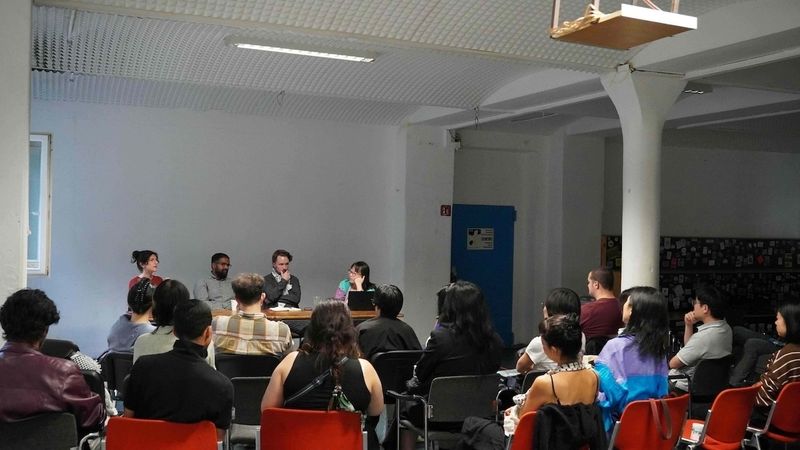
In Berlin, I hosted the panel talk and community hangout for labor organizers and activists from three different organizations: The event featured a panel discussion first joined by Aju John from Migrant*innen für Menschenwürdige Arbeit, Lea Rakovsky, Ban Ying e.V., and Gabriel Berlovitz from MigLAB Ug, featuring food provided by Antifascist Curries.
Photo credit: Mesa
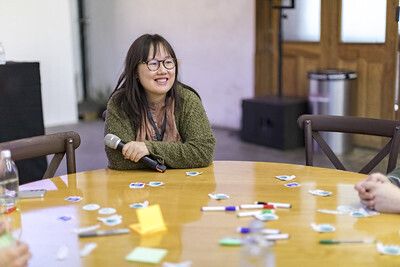
In Madrid, I supported two queerfeminist activists who have been long-term involved in community building for the Chinese migrant, diasporic, and exiled community, for hosting their first community workshop on "Black job" and financial inclusion, as a large percentage of Chinese communities are unbanked or semi-banked in Spain, and have their own informal networks and infrastructures.
Screenshot from the workshop Common Struggles and Financial Imaginaries
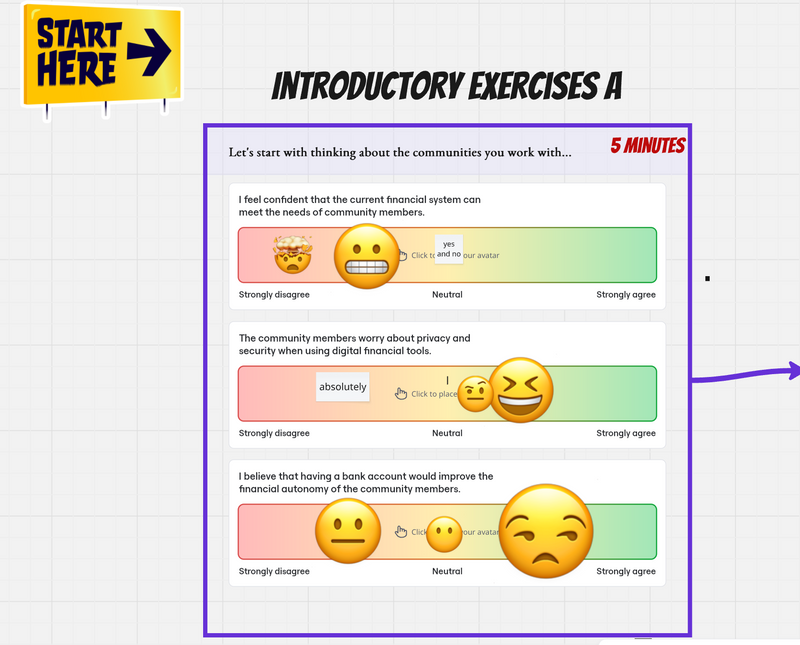
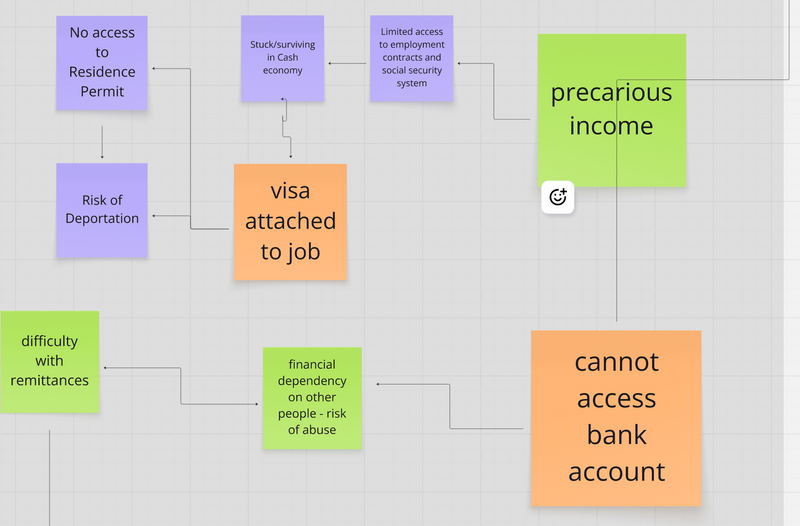
To get this conversation started is only the very first step; through the project, I leveraged the lived experiences and expertise of the communities and tried my best to connect them through workshops and consultations. In the banner image, there is a screenshot from an exercise on linking financial access with structural factors. Throughout my project, I have developed the online workshop format Common Struggles and Financial Imaginaries. By testing the workshop formats with several community leaders across Berlin and Spain, I utilize this workshop as a way to conduct expert consultation in a group setting, and then build solidarity across communities and movements.
Capacity Building and Materials Development:
Through the contribution of 3 project partners, I have produced the first draft of the educational materials YOU(WE) DESERVE BETTER: A Community toolkit, incorporating exercises like barrier mapping, storytelling, and roleplay, empowering workers to articulate financial exclusion experiences and build collective awareness of digital financial rights. The plan is for this material to be edited, designed, and distributed to diverse stakeholders in the following month, including organizers, cultural workers, and informal workers communities.
Outreach and Community Engagement:
Throughout the project, including Interledger Summit 2025, I have attended 5 conferences in Portugal, Germany, Mexico, Japan(Self-funded), and Malaysia(Self-funded) that have significantly expanded my network and the potential reach of the project. Through these conferences, I got to build potential future networks of collaboration in supporting the communities and presented my work in progress to diverse stakeholders.
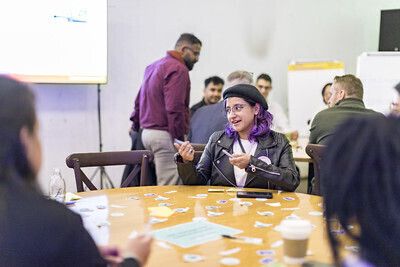
One highlight is the possibility of being involved in the planning and program of the Interledger Summit 2025. It was an absolute honor and privilege to be able to join the Interledger team in Mexico in May and meet the rural communities that are supported by Interledger's work. It has strengthened my belief in the importance of bringing in the perspective of underrepresented communities into spaces and discussions they are often in. This encouraged me to invite and bring labor organizers and lawyers who are not often in spaces and discussions on our digital financial futures to co-facilitate the Workshops From Financial Inclusion to Financial Justice at the Interledger Summit, creating participatory spaces where activists who are working daily with gig workers and experts explored systemic tensions around platform-induced precarity and why a fair and just financial system is so urgently needed, but hard to realize.
The project involved multiple written outputs to report on research outcomes through literature review and qualitative research, hosted events, and media advocacy efforts. All drafts are ready, and now in the final editing process, waiting to be published:
- Research Report: Financial Exclusion, Platform Capitalism, and Translocal Labor Justice in Berlin and Madrid, draft ready, still in need of editing and feedback.
- Blog: From the Frontline in Berlin: Navigating Informality in Transnational Labor Struggles, finished and waiting to be published.
- Blog: Beyond Flexibility: Reimagining Financial Justice in the Gig Economy, finished and waiting to be published.
Collaborative works that are currently in the final round of editing before publishing:
- Community Toolkit: to be designed and distributed.
- Policy Brief (Co-writing with Ayden Férdeline): to go through the final round of editing.
Project Impact
One of the major goals of this project has been to create spaces for dialogue across political movements and communities that center the struggles of workers, voices that are often ignored, and to bring labor issues onto the agenda for a wider, more diverse group of stakeholders. I firmly believe that financial inclusion and labor struggles are deeply interconnected, as the very architecture of the contemporary financial system is linked to the capitalist structures shaping all workers’ realities.
During the participatory workshops at this year’s Interledger Summit, the word “risk” repeatedly surfaced. Our entire financial world is fundamentally built on risk, which frequently limits efforts toward financial inclusion: innovation inherently involves risk-taking, and exclusion often stems from perceived risk profiles. While mitigating and understanding risks are crucial to making financial inclusion feasible, the question remains: Is this enough to build a truly just financial system? What would a financial system that is not based on speculation look like? These are important questions that nobody has answers but I wish to carry forward in future work.
I can confidently say that I have fulfilled my intended impact by carving out spaces for dialogue and knowledge production wherever I identified gaps.
Concluding Remarks
I am extremely grateful not only for the past half a year but also for the past years of being part of the Interledger community. I have learned and grown, and built real connections here. I am immensely grateful to be given the space to try out new ideas, work in my own way, and bring the voices of communities that are often not heard and understood. I know it is not possible to have this extent of support, trust, and freedom in every ecosystem, and I am sincerely grateful to everyone who made this possible, and for many meaningful conversations I have had because of ILF.



Top comments (1)
Thank you for submitting your final report! It was a pleasure having you as one of the 2025 Interledger Ambassadors.