


Brief Project Description
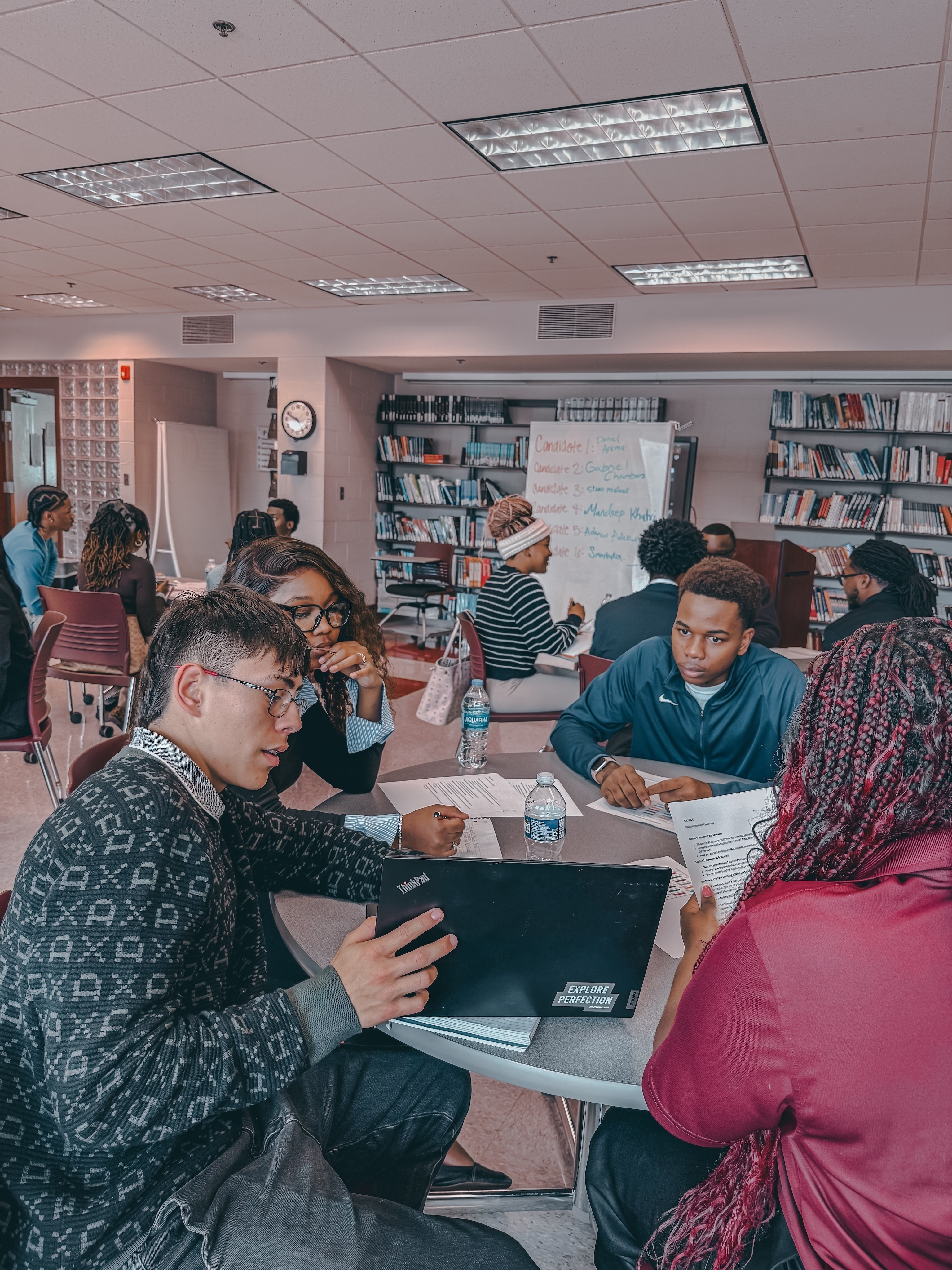
What a challenging and rewarding project! Alabama A & M University (AAMU) concluded a 12-week interdisciplinary program in which selected learners from the College of Business and Public Affairs and the College of Engineering, Technology and Physical Sciences collaborated to design digital banking prototypes. With support from Blaze Group®, a fintech education and strategy firm, students became immediate entrepreneurs and gained knowledge of digital finance, and Interledger Protocol-powered tools. Participating students designed, prototypes, and showcased inclusive payment solutions that connect underserved communities to the digital economy. The Program was credit-earning for the business students and combined design thinking, startup incubation, and leadership training to inspire new ideas for financial inclusion.
Project Update
The Dollarcraft Program had an incredible launch and sparked interest among the College of Business and Public Affairs and College of Engineering Technology and Physical Sciences learners at AAMU. The inaugural cohort did an outstanding job executing. To determine the effectiveness of the project, we asked the students to candidly share their experience. The following is some of the feedback received:
• “It was a livid experience that grew my technical and communication skills”
• “It was extremely enlightening and game-changing”
• “It was an enriching experience that completely changed my perspective on financial systems”
Students were challenged and stretched with their ability to work as a team effectively. Towards the end of the semester, the teams began to lose their initial vigor and presence. Reminding them that their grade would be impacted by how they finalized the project kept them motivated and committed.
Project Impact & Target Audience(s)
Each student was tasked to identify a problem to solve in the world of financial access and to target a segment of the community that their prototype would aid. All of the students targeted segments of the population that could benefit the problem of their choice. Two of the problem areas involved international residents who may face difficulties with transferring funds and being confronted with the challenges of the conversion rates. Another student addressed the challenges that exists for the elderly who may have transportation hurdles.
As AAMU learners engage in future projects, it will be noted to embed elements into the project that allow the students to obtain real stats for their target population. The prototypes were 100% functional however, a facet of the project should be implemented to gather real-life data from the target population that the prototypes serve.
Progress on Objectives, Key Activities
We are extremely pleased with the project outcomes. Stated below are the objectives and the end results:
Objective 1: Articulate the role of open payments and ILP in expanding access to financial services.
• Students developed a clear understanding of ILP as a “bridge” for moving monies across different financial systems
• Guest speakers during the weekly sessions and assigned case studies helped students connect open payment concepts to real-world solutions
• During the public showcase, the students were able to demonstrate the ILP constructs for their projects.
Objective 2: Conduct primary research in underbanked markets and translate insights into actionable prototypes.
• Students conducted both qualitative and quantitative research within underbanked communities
• Teams consistently addressed challenges faced by underserved populations in their ideas and pitches and executed research into meaningful “so what” insights that informed design decisions
• Prototypes were refined through direct user feedback and iteration
Objective 3: Use ILP technologies (including Rafiki) to develop and demo inclusive financial tools.**
• Teams built fintech prototypes using ILP and integrated Rafiki wallet functionality
• Students successfully demonstrated wallet-to-wallet transactions
• The cohort engaged in hands-on troubleshooting sessions which supported their technical development
Objective 4: Understand real-world business planning, from go-to-market strategy to risk management.
• Students developed go-to-market strategies and pilot launch plans
• Teams created pitch decks, financial projections, and revenue models
• Risk considerations (cybersecurity, fraud prevention, compliance) were built into product design
Objective 5: Collaborate cross-functionally as future founders, product managers, and engineers.
• Students operated in startup-style teams with defined roles (CEO, CRO, Product, CTO)
• Collaborated with computer engineering students on MVP development
• Used peer feedback, iteration, and shared accountability to move projects forward
Overall, the assessment showed that students not only learned concepts but they applied them in real-world contexts. The program successfully blended technical skills, business strategy, and experiential learning. Outcomes reflected workforce-ready capabilities during the Dollarcraft Public Showcase.
Communications and Marketing
The Dollarcraft Program has been widely promoted through Alabama A&M University’s official news channels, as well as across key social media platforms including LinkedIn, Facebook, and Instagram. These efforts have generated strong visibility for the initiative, resulting in significant interest and positive feedback from both the university community and external audiences.
Public engagement included featured university news articles and a video highlight of the Public Showcase, which captured the interdisciplinary innovation and impact of the student projects.Examples of this coverage include:
Team Selected for Dollarcraft Challenge to Drive Inclusive Financial Solutions – Alabama A&M University
Interdisciplinary Teams to Present Real-World Digital Banking Prototypes – Alabama A&M University
https://vimeo.com/1194488499/b2f32596a9?fl=tl&fe=ec
https://drive.google.com/file/d/1N8Eko4C2CLD_uLWYfEYwF_FRzkXJiuL0/view
Each student was tasked with identifying a real-world challenge related to financial access and defining a target population that their prototype would serve. All students successfully identified meaningful problems and aligned them with specific community segments that would benefit from their proposed solutions. Two of the projects focused on challenges faced by international residents, who often encounter significant barriers in transferring funds and navigating unfavorable currency exchange rates. Another project addressed financial access issues among elderly populations, particularly those who experience difficulty accessing traditional banking institutions due to transportation limitations.
What’s Next?
Building on the insights gained from the first phase of the project, the program will continue to refine and expand student-led innovation in financial access. Future cohorts will be guided to further develop their prototypes with an increased emphasis on scalability, real-world application, and user testing within their targeted communities. Leverage promotional materials and video content to expand visibility of the project beyond campus channels. Engage local media and community outlets to foster broader dialogue and awareness of the project’s impact. Increase student engagement and recruitment for future cohorts by showcasing student testimonials. Promote the Dollarcraft Hackathon through targeted outreach to high school educators and partners.
Community Support
The Dollarcraft innovators would welcome industry expertise from the Interledger community. How?
- Offer guest speakers and executive coaching to enhance student and program development.
- Serve on an advisory board to provide strategic guidance and industry-informed insight.
- Support faculty development through industry-aligned training reflective of evolving fintech trends.
- Provide actionable feedback and recommendations to accelerate program growth and impact.
- Facilitate connections with industry leaders, corporate partners, and professional mentors to strengthen the program ecosystem.
- Contribute funding to support project expansion and ensure long-term sustainability beyond the pilot phase.
Additional Comments
On behalf of the College of Business and Public Affairs at Alabama A & M University, we are grateful to the Interledger Foundation for the support and for the partnership on the global financial inclusion initiative. To echo the voices of the students, this project was enlightening, insightful, enriching and transformative.


Top comments (1)
Thanks for the update @sonyamerritt_175. This is great work happening at Alabama A&M. I love the enthusiasm and curiosity of the students involved. Looking forward to the next run of the DollarCraft Program & Public Showcase.