


Brief Project Description
Kanzu Microloans enables SACCOs, Village Savings and Loan Associations (VSLAs), and Microfinance Institutions (MFIs) in Uganda to offer fast, digitally managed microloans to underserved communities.
Built into Kanzu Finance's Kanzu Banking platform with support from the Interledger Foundation, the project combines digital lending workflows, credit assessment, and mobile money integration. It also explored the use of Interledger and Rafiki for interoperable payments.
This final report shares our production results, challenges, technical lessons, and next steps.
Our previous update: Kanzu Microloans — Progress Report 2.
Project Update
From an ambitious concept to a working lending product
When we began Kanzu Microloans, our goal was to address a persistent challenge in community finance: members of SACCOs and MFIs often struggle to access credit quickly, even when they have established relationships with their financial institutions.
We wanted to equip these institutions with technology that could make small loans easier to apply for, assess, disburse, and repay, while exploring how open payment infrastructure could enable interoperability across financial systems.
With the support of the Interledger Foundation, we moved beyond development and testing to deploy the product in a real lending environment.
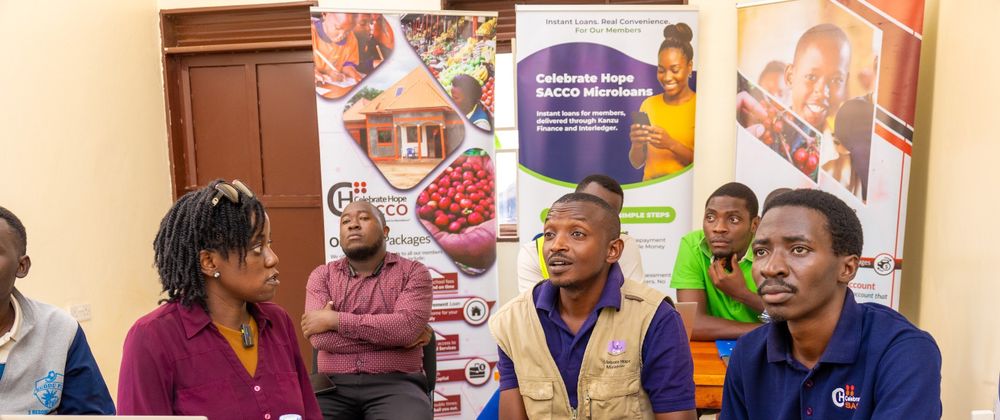
Our first implementation went live at Celebrate Hope SACCO on 14 March 2026. We presented the project to the Interledger community in March and held its public launch on 3 July 2026, coinciding with Celebrate Hope's 10-year anniversary.
Here’s our community call
By 28 October 2026, the platform had facilitated:
- 99 microloans disbursed
- UGX 23.4 million in lending (approximately USD 6,300)
- 37 individual borrowers
- 88 closed loans and 11 active loans
These results represent a modest but important milestone: lending infrastructure developed through the grant is operational and has processed real financial transactions for members of a community institution.
We also completed work on a Rafiki integration and successfully peered with a Rafiki test node.
However, not every part of our original vision reached production, and the rollout encountered challenges that influenced the project's direction.
What we learned from our first deployment
The Celebrate Hope pilot gave us an opportunity to evaluate the product in a real institutional environment, including its operational controls and adoption patterns.
During the initial months, our monitoring identified unauthorised loan disbursements.
We paused the product, informed Celebrate Hope's leadership, and worked through a review of the affected records. We subsequently strengthened controls, including additional approval checks and reconciliation between internal transaction records and actual mobile money movements.
The product then resumed operation.
The experience reinforced an important lesson: reliable, automated digital lending requires more than rigorously tested working software. Great monitoring in production is vital. While various financial controls, accountability, different institutional processes, and trust can be designed into the product from the outset, as customers interact with it in production, a fast feedback loop is essential in ensuring the product continues to work well.
The process of implementation of the changes and working with the SACCO leadership, while it refined the product, it impacted uptake.
Developing sustainable, consistent usage remain priorities for Celebrate Hope.
Expanding the product for Finfort
Our second institutional deployment is with Finfort, a Ugandan microfinance institution serving entrepreneurs and small businesses, including women in business.
Working with Finfort has helped us extend Kanzu Microloans beyond the requirements of our initial SACCO implementation.
Their onboarding and operational needs prompted further work on digital identity verification, cash-cover functionality, credit processes, and lending workflows.
We also spent additional time validating the commercial model, conducting demonstrations, and aligning the implementation with their institutional requirements.
These enhancements contributed to delays against our original timeline.
Finfort's launch is currently scheduled for 20 November 2026.
This represents an important next step in the project's financial inclusion ambitions, particularly our objective of reaching more women through community-based and microfinance institutions.
As of this writing, Finfort has not yet contributed to the borrower impact figures but it will in our subsequent updates.
Settlement integration: finding a practical solution
Another significant challenge was identifying suitable settlement infrastructure for small-value payments.
Our original approach considered Chimoney, but its costs proved unsuitable for the microloan transaction sizes we were targeting.
We subsequently integrated with Binusu, but encountered intermittent API availability that made it difficult to rely on for our intended use case.
After evaluating these options, we selected Yellow Card as our preferred settlement partner for the relevant payment architecture.
The experience highlighted how critical cost, reliability, and integration complexity are when designing financial services for low-value transactions.
Interledger and Rafiki: an important architectural lesson
Interledger was central to our original technical vision.
We developed a Rafiki adaptor, built the integration, and successfully established peering with a Rafiki test node. This gave our team practical experience working with Interledger infrastructure and its associated payment architecture.
However, an important architectural question emerged during our technical design review.
Our proposed implementation positioned Rafiki between accounts controlled by Kanzu Finance and our payout infrastructure. In that model, Kanzu effectively acted as both the sending and receiving institution having replaced the work we’d initially done with Binusu.
The review identified that this introduced additional complexity without making effective use of the interoperability benefits that Interledger and Open Payments are designed to provide.
After examining this feedback, we agreed that taking the existing architecture into production would not be the right technical decision.
We therefore deferred the production Rafiki node rather than deploy an integration that did not deliver a meaningful interoperability benefit.
This means that, at the conclusion of the funded period:
- Our digital lending workflows are operational with mobile money disbursement and repayment.
- Our Rafiki integration and test-node peering have been completed.
- Production lending transactions are not currently processed over Interledger.
- A production Rafiki node has not been launched.
We believe this experience offers a useful contribution to the ecosystem: an Interledger integration should be driven by a real interoperability problem, and should be designed across parties.
We are exploring a revised architecture in which distinct institutions or wallet providers exchange value through interoperable payment infrastructure. Such a use case could more directly demonstrate the benefits of Interledger, provided the technical, commercial, and regulatory requirements are met.
Project Impact & Target Audience(s)
Who we set out to serve
Kanzu Microloans was designed primarily for people who face barriers to timely, affordable credit through conventional financial institutions.
Our intended beneficiaries include low-income and rural households, informal workers, underserved SACCO and VSLA members, and microfinance clients.
Women and girls were identified as a priority group in our original inclusion ambitions, with lending to women entrepreneurs an important focus of our institutional expansion.
Our institutional audience includes SACCOs, VSLAs, and MFIs that need practical digital tools to manage lending more efficiently and responsibly.
Actual impact during the funded period
Our measured borrower outcomes so far come from Celebrate Hope SACCO, covering 14 March to 28 October 2026.
| Indicator | Actual result |
|---|---|
| Institutions operating the product | 1 — Celebrate Hope SACCO |
| Individual borrowers | 37 |
| Loans disbursed | 99 |
| Total amount disbursed | UGX 23.4 million |
| Average loan amount | Approximately UGX 236,000 |
| Closed loans | 88 |
| Active loans | 11 |
| Female borrowers | 7 |
| Female participation | 19% |
| Average loans per borrower | Approximately 2.7 |
The figures demonstrate real lending activity and repeat use of the service.
However, they are not sufficient on their own to establish improvements in household income, borrower satisfaction, or long-term financial resilience.
Our progress on gender inclusion is also below our original ambition.
Only seven of the 37 borrowers at Celebrate Hope were women, representing approximately 19% of those served.
Our earlier progress reports described ambitions to expand access with women representing 70% of intended beneficiaries.
We have not achieved that scale during the funded period.
We are using these results to shape our implementation strategy. Finfort's focus on entrepreneurs and women in business offers a more direct opportunity to reach our priority audience, but its impact will need to be measured after launch.
How the project supports the Interledger Foundation's mission
The Interledger Foundation supports open, interoperable payment infrastructure and the advancement of equitable digital financial inclusion.
Kanzu Microloans contributes to this mission in three areas.
1. Expanding access to digital financial services
The project makes digital microloan infrastructure available to community-based institutions serving people who may have limited access to traditional credit services.
Our initial deployment provides a foundation for broader reach, although current adoption remains modest.
2. Building institutional capacity
We have developed lending workflows that combine loan management, credit assessment, digital transaction processing, and reconciliation.
This helps participating institutions modernise their operations and creates opportunities to improve efficiency, oversight, and the member experience.
3. Contributing practical knowledge to the open payments ecosystem
We developed and tested a Rafiki integration and documented the architectural constraints of our original approach.
Although we have not achieved live Interledger payments, the work provides technical learning about how open payment infrastructure can be applied responsibly in real financial service environments.
Together, these outcomes represent progress toward inclusive finance, while also making clear the areas where further development, adoption, and measurement are required.
Progress on Objectives, Key Activities
Our first two progress reports established the four objectives for the project.
Progress against our original objectives
Objective 1: Develop ILP-enabled instant microloan infrastructure within Kanzu Banking
Status: Partially achieved — digital lending operational; production ILP component outstanding.
Our objective was to build an instant microloan solution within Kanzu Banking that SACCOs, VSLAs, and MFIs could use to deliver real-time lending services, with Interledger forming part of the payment infrastructure.
What we achieved
We developed and integrated the digital lending functionality into Kanzu Banking, including loan product configuration, loan applications, credit assessment workflows, disbursement, and repayments.
The product went live at Celebrate Hope SACCO in March 2026 and has since facilitated 99 loans worth UGX 23.4 million.
We also developed and tested the Rafiki integration.
What remains outstanding
The live lending implementation uses mobile money rather than production Interledger payments.
Our original ILP-enabled production architecture was deferred following the technical design review described above.
Additional institutional deployments are also required before the infrastructure can demonstrate broader adoption across SACCOs, VSLAs, and MFIs.
Assessment: We successfully delivered operational instant microloan infrastructure, but did not achieve the full ILP-enabled production objective.
Objective 2: Advance financial inclusion for underserved communities
Status: Partially achieved — initial borrowers reached; inclusion targets not yet met.
Our objective was to improve access to fast, secure digital credit for underserved communities, with particular emphasis on women, low-income households, and people excluded from conventional financial services.
What we achieved
Our first deployment reached 37 borrowers at Celebrate Hope SACCO, with 99 loans disbursed by 28 October 2026.
The product has demonstrated that a community financial institution can deliver digitally managed microloans to its members.
We have also developed the product further to support Finfort, whose focus on entrepreneurs and women in business aligns more closely with our intended target audience.
What remains outstanding
Our original ambition was significantly larger than the scale reached during the grant period.
Female participation at Celebrate Hope is currently 19%, well below our 70% intended-beneficiary ambition.
We have not yet demonstrated broad inclusion outcomes, substantial institutional reach, or measurable improvements in borrowers' financial resilience.
Assessment: We established a practical foundation for financial inclusion, but the scale, demographic reach, and impact we originally intended remain to be achieved.
Objective 3: Leverage open infrastructure through ILP and Rafiki
Status: Partially achieved — integration and testing completed; live interoperability outstanding.
Our objective was to use Interledger and Rafiki to support interoperable payments and establish a foundation for financial transactions across different payment systems and institutions.
What we achieved
We developed a Rafiki adaptor, built the integration, and successfully peered with a Rafiki test node.
The development process enabled our team to work directly with open payments infrastructure and engage with the wider Interledger community.
Our architectural review also helped clarify the conditions under which an Interledger implementation would deliver practical value.
What remains outstanding
We did not launch a production Rafiki node.
The current digital lending implementation does not process disbursements or repayments over Interledger.
We have not demonstrated a live cross-border or institution-to-institution payment flow using ILP.
Assessment: We achieved meaningful technical development, testing, and learning, but not the intended production interoperability outcome.
Objective 4: Strengthen SACCOs and VSLAs through digital transformation
Status: Partially achieved — operational implementation completed at one institution; wider benefits still to be demonstrated.
Our objective was to strengthen community financial institutions by digitising lending workflows, reducing operational friction, supporting credit assessment, and enabling sustainable growth.
What we achieved
Celebrate Hope became our first operational institutional deployment.
We implemented digital loan management workflows and provided training, onboarding support, and field engagement to support the institution's use of the product.
The implementation also enabled us to identify and strengthen operational controls that are essential for responsible digital lending.
Our work with Finfort further expanded the product's institutional capabilities, including identity verification, cash-cover requirements, and more complex lending workflows.
What remains outstanding
Product adoption at Celebrate Hope has been lower than expected and we are working with the leadership to support in changing this.
Additional institutional deployments, like the one with Finfort, and measurable improvements in operational results will be necessary to demonstrate the benefits we originally envisioned.
Assessment: The project delivered functioning digital lending capabilities and practical institutional experience, but broader operational and commercial impact is still a work in progress.
Progress on our ten key activities
In addition to the four objectives, we tracked ten implementation activities. Below is how delivery evolved during the funded period.
| # | Key activity from previous reports | Final status | Outcome and outstanding work |
|---|---|---|---|
| 1 | Backend and frontend development: loan product engine, credit scoring, disbursement, repayment | Completed for the initial deployment | Core lending functionality implemented and operational at Celebrate Hope. |
| 2 | Rafiki adaptor integration and mobile/web interfaces | Partially completed | Adaptor & frontend built and tested. Production ILP processing was not launched. |
| 3 | Sandbox testing and Rafiki peering | Completed for testing | Rafiki integration built and test-node peering completed. |
| 4 | Developer playground for Rafiki and loan simulations | Reported completed previously | This as completed. |
| 5 | Peer with a public Rafiki node and conduct interoperability stress testing | Partially completed | Test-node peering achieved. Production interoperability was not achieved. |
| 6 | User-centric design and accessibility for users with low digital literacy | Partially completed / validation ongoing | Digital lending interfaces developed. Further evidence of accessibility testing, assisted usage, and low-literacy user experience is required. |
| 7 | Community and regulatory engagement | Ongoing | Engagement with institutional partners, Interledger community members, and relevant stakeholders throughout development and deployment. |
| 8 | Regulatory alignment with BoU | In progress | Regulatory and information-security work advanced. Outstanding payment-system licensing remains to be completed. |
| 9 | ILP developer community participation and ecosystem contribution | Completed, with continuing engagement | Interledger Summit participation, community presentation done and continuing participation in the ecosystem |
| 10 | Marketing and communication through content, events, webinars, and impact stories | Partially completed | Community progress reports shared, presentations done, branding, promotional material development and Celebrate Hope public launch done. Finfort to be launched. |
What changed from our original implementation plan?
Our earlier reports documented strong progress in backend and frontend development, the completion of the Rafiki adaptor, preparation for settlement, and plans to move into institutional deployment.
During the remainder of the funded period, three developments materially influenced delivery.
First, operational challenges during our Celebrate Hope deployment required investigation, stronger controls, and renewed efforts to build borrower confidence.
Second, Finfort's institutional requirements expanded the scope of product development and delayed our second deployment.
Third, the Rafiki design review led us to defer the original production architecture and reconsider how Interledger should be used.
These changes affected timelines and delivery priorities, but also provided practical lessons about operational readiness, interoperability, governance, and financial inclusion.
Communications and Marketing
Throughout the grant period, we engaged with the Interledger community and our partner organizations to share progress, demonstrate our work, and engage prospective institutional users.
Community engagement and public visibility
Interledger Summit 2025 — Mexico City
Our team participated in the Interledger Summit, presenting our work and engaging with developers, payment infrastructure specialists, and fellow grantees.
We also participated in the summit hackathon, where our separate education-and-payments project, Shabaha, achieved third place.
While Shabaha was distinct from Kanzu Microloans, the experience strengthened our engagement with the broader Interledger developer community.
Interledger Community updates
We published our project introduction and two progress reports documenting the development of Kanzu Microloans, its original technical architecture, and implementation milestones.
We also presented the project to the Interledger community in March 2026.
Kanzu Code Interledger Community Presentation
Celebrate Hope SACCO public launch — 3 July 2026
The product was publicly launched during Celebrate Hope's 10-year anniversary celebrations, creating an opportunity to introduce the digital lending service to members, staff, and other stakeholders.
The event provided an important platform for community engagement and product awareness.
Use of marketing and communications resources
Our Marketing activities focussed on:
- Project branding and printed communication materials
- Fliers and promotional activities
- Digital advertising and community awareness
- The Celebrate Hope launch and anniversary engagement
- Photography and video production documenting the project and its rollout
These activities supported institutional visibility and member awareness.
Our experience reinforced the need to pair public campaigns with sustained institutional onboarding, borrower education, and confidence-building.
A larger awareness and onboarding effort is planned around Finfort's launch, subject to its operational readiness.
We acknowledge the Interledger Foundation's support of this project and the contribution of its Program Team and technical community.
What's Next?
The conclusion of the grant-funded period is not the end of Kanzu Microloans. The infrastructure developed provides a foundation for further institutional deployment, product improvement, and financial inclusion outcomes.
Our priorities are:
1. Launch and measure the Finfort deployment
We are working toward the scheduled launch on 20 November 2026.
After launch, we will focus on onboarding, lending activity, repayment performance, and the number and proportion of women benefiting from the product.
Finfort is especially important to our objective of serving women entrepreneurs.
2. Strengthen adoption at Celebrate Hope
Our priority is to rebuild confidence, support consistent product usage, and work with the SACCO's leadership to address barriers to member adoption.
We will continue monitoring loan activity and strengthening operational controls.
3. Explore a better-aligned Interledger use case
We intend to examine institution-to-institution payment models where independent financial institutions or wallet providers can benefit from genuine interoperability.
Potential use cases include lender-to-institution funding flows and inter-institution repayment or settlement arrangements.
Any future implementation will require validation of the technical design, business case, regulated participants, and settlement model before production deployment.
4. Improve our measurement of financial inclusion outcomes
Beyond transaction volumes, future reporting should help us understand who is accessing credit, how frequently they use it, how successfully loans are repaid, and whether the service is improving access for previously underserved groups.
Community Support
We would welcome support and collaboration from the Interledger community in three areas.
Interledger architecture and interoperability
We are particularly interested in conversations with teams using Rafiki and Open Payments for transactions between independent financial institutions, especially in emerging markets.
Operational controls and responsible digital lending
We welcome lessons from organisations working with SACCOs, MFIs, and other community-based financial institutions on approval processes, reconciliation, risk management, borrower trust, and sustainable adoption.
Partnerships and capital
Introductions to institutions, settlement providers, or impact-focused investors interested in interoperable financial infrastructure and digital financial inclusion in Africa would be valuable as we plan the next phase.
We are also happy to share our own technical and implementation lessons with other grantees exploring similar challenges.
Additional Comments
We are grateful to the Interledger Foundation for funding this work and for creating an environment where grantees can experiment, receive candid technical feedback, and learn from one another.
We are particularly appreciative of the Program Team, technical reviewers, fellow grantees, and our institutional partners, Celebrate Hope and Finfort.
We conclude the funded period with operational digital lending infrastructure, real pilot experience, and a clearer understanding of the work required to reach our intended audience at scale.
Our original ambitions for adoption, gender inclusion, and live Interledger payments have not all been realised. But the work has moved us from ideas and prototypes to real-world implementation, with lessons that will inform how we build and scale from here.
For Kanzu Finance, the next chapter is about turning that foundation into sustained, measurable financial inclusion.
Thank you to the Interledger Foundation and the wider community for being part of this journey.



Top comments (0)