

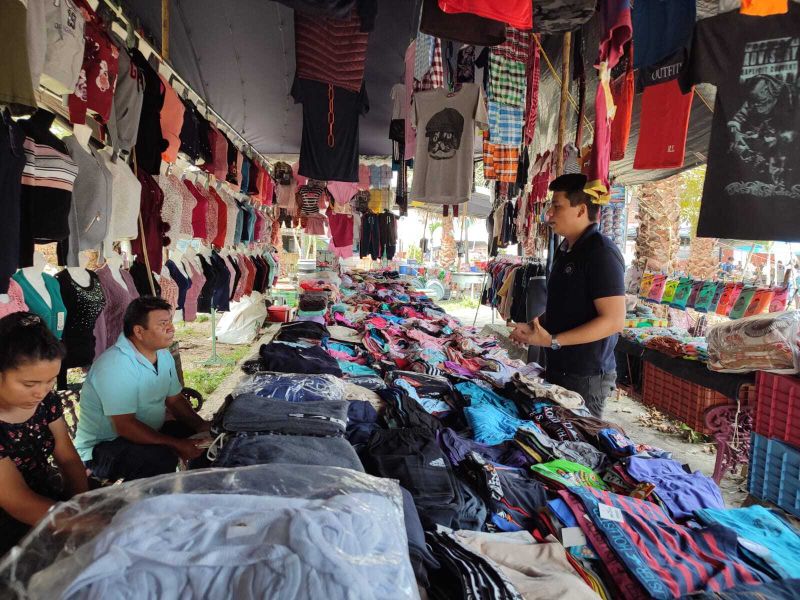
In the gleaming skyscrapers of Mexico City’s financial district, transactions move at the speed of light. But travel just a few hours into the Sierra Norte of Puebla, to the high-mountain community of Cuetzalan, and the reality of money changes. Here, among 150 scattered communities where 84% of the 50,000 inhabitants live in poverty, the economy is heavy, physical, and expensive. This is the "Rural Cash Trap."
In these communities, nearly 90% of payments are still made in cash. For Mexico’s 30 million unbanked adults, financial exclusion isn't just a lack of an app; it’s a systemic barrier to growth. E-fectivo (www.efectivotech.com) was born to bridge this divide, not by replacing local institutions, but by empowering them. By modernizing the 144 Savings and Loan Cooperatives (SOCAPs) that already hold the trust of 3.7 million members and $5.9 billion USD in deposits, E-fectivo is turning local trust into digital power.

Lesson 1: Adoption First, Technology Second — The Human-Centric Pillar Model
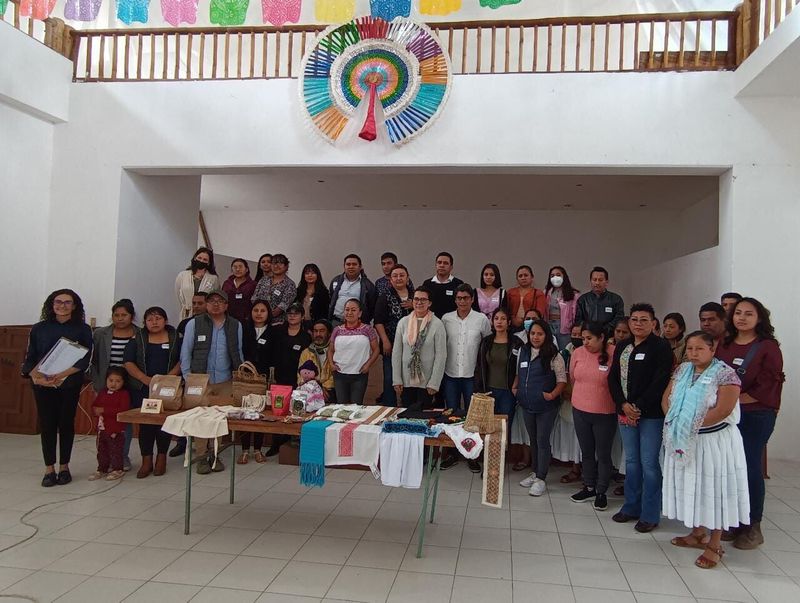
The first hard truth of rural fintech is that the most elegant code in the world fails if it ignores the human scale. We have seen countless Silicon Valley-style "wallets" land in rural Mexico only to be deleted. Why? Because they lacked a focus on adoption. E-fectivo succeeds by anchoring its technology in a three-pillar strategy:
- Digital Enablement (Education): Moving beyond "help menus" to "training the trainers." We empower local leaders in cooperatives like Tosepan Kali to guide their members through the digital transition.
- Financial Inclusion: Strengthening the SOCAP’s core to offer secure, cardless accounts that actually respect the cooperative philosophy of shared resources.
- E-commerce & Liquidity: Connecting indigenous agro-producers and artisans directly to markets. This isn't theoretical—it’s already happening through platforms like Tianguis Kostik (www.kostik.biz) incubated in Cuetzalan Puebla and replicated with BioDiverCiudad in Xochimilco Mexico City, where technology serves the real-world trade of vanilla, coffee, honey and vegetables.
As the endorsement letter from MEXICOOP succinctly puts it:
"We have observed that purely technological solutions often fail because they lack a focus on human adoption."
Lesson 2: Clearing vs. Settlement — Why Ultra-Fast Ledgers are the Key to Inclusion
In our initial design, we followed the industry trend of using a blockchain as our primary ledger. We quickly learned that for a coffee farmer, waiting for a blockchain confirmation is a lifetime. We made a "counter-intuitive" pivot: we moved the blockchain to the periphery.
In our new architecture, we utilize the TigerBeetle ledger for internal "Clearing." Clearing is the immediate, deterministic promise that money has moved. Because TigerBeetle is designed for sub-millisecond latency and high-performance accounting, it can handle:
- Current Architecture (Blockchain-based): ~10,000 Transactions Per Second (TPS).
- New Architecture (TigerBeetle-powered): 1,000,000+ Transactions Per Second (TPS).
This speed makes a digital payment feel as fast as handing over a 50-peso bill. We only use the Blockchain for "Track 2" Settlement—the actual batching of liquidity between cooperative nodes. By removing the need to pay a blockchain fee for every individual cup of coffee, we make the system economically viable for the smallest producers.
Lesson 3: Resilience is the Ultimate Strategy — Bypassing Rails and Regulations
A Fintech Strategist must always plan for the "what if." While we embrace the potential of Distributed Ledger Technology (DLT), we recognize the volatility of the Mexican Fintech Law. A surprising lesson from our development is the necessity of Operational Resilience.
If blockchain-based settlement faces regulatory barriers, our architecture features a mandatory SPEI fallback. This ensures that Track 2 settlements can seamlessly switch to Mexico’s national interbank system without service interruption.
Furthermore, we leverage Banxico’s CoDi (Cobro Digital) infrastructure.
Important Banxico Regulation: By mandate, CoDi collections must be free of charge for both the payer and the receiver.
By using the CLABE (an 18-digit interbank address) as a "Universal Identifier" and linking it to an Interledger Payment Pointer (e.g., $efectivo.mx/user123), we allow chinampa producers in Xochimilco to accept zero-fee, cardless payments.
We aren't just building an app; we are harmonizing with national infrastructure to bypass expensive traditional card networks.

Lesson 4: The Zeebe Advantage — Making Complex Financial Journeys Invisible
As we move from a "Closed Loop" (Phase 1) to a "SOCAP Interoperable Network" (Phase 2), the complexity of moving money across different networks becomes immense. To solve this, we implemented the Zeebe Workflow Engine.
Zeebe orchestrates the "financial jobs" using BPMN 2.0 standards—moving a transaction from Initiated to Validating, Requesting Quote, and Executing. This ensures ACID compliance (Atomicity, Consistency, Isolation, Durability). If a transaction fails at any step, the system knows exactly how to compensate or retry, ensuring that no money is ever "lost" in the ether.
This technical rigor allows for "Autopeering." In the future, these small rural cooperatives won't need manual configurations or bilateral contracts to trade. Through the Rafiki node framework and the Interledger Protocol (ILP), they will eventually use dynamic market rates and automated negotiation to peer with international financial institutions.

Conclusion: A New Blueprint for Inclusion
The E-fectivo revolution is proving that the future of finance isn't found in a centralized mega-bank, but in the interoperable "autopeering" of thousands of community-led cooperatives. By combining the high-speed, deterministic accounting of TigerBeetle with the global reach of the Interledger Protocol, we are democratizing access to wealth for the people who need it most — the agro-producers and artisans of Cuetzalan and Xochimilco.
If we can bridge the gap between a mountain village and a global payment network using open-source protocols, we must ask ourselves: Does the future of global finance lie not in big banks, but in the radical interoperability of the Social and Solidarity Economy?



Top comments (1)
great article!!! absolutely love the visuals and and so great to hear you're leveraging Rafiki in your project :) great work @alejo_937