

A Session Summary from the Interledger Summit 2025
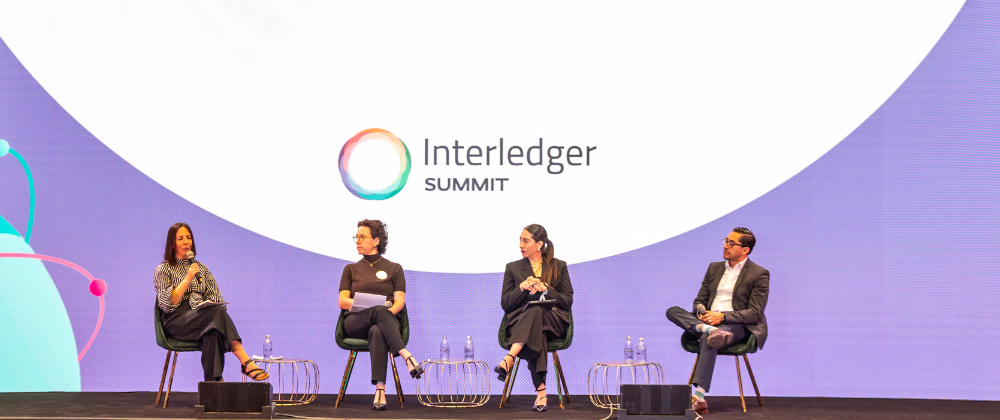
At the Interledger Summit 2025, the panel “Trustworthy by Default: Designing Digital Finance People Choose to Use” confronted a stark paradox in Mexican financial services. Despite having 400 regulated financial institutions, including 50 banks, 40 SOFIPOs (small banks serving specific communities), and 60 regulated fintechs, trust in digital finance remains alarmingly fragile. Moderated by Sarah Corley, CEO of the Alliance of Digital Finance and Fintech Associations, the discussion brought together Alejandro Maldonado Viveros, CEO of Fintechland; Fiorentina García Miramón, Executive Director of Tec-Check; and Alejandra Cullen Benítez, partner at FinSocial. Their conversation revealed that Mexico’s financial inclusion challenge is primarily about designing services worthy of users’ trust from the start, and not one primarily of technology or access.
The Trust Crisis by the Numbers
García Miramón opened with sobering statistics from Tec-Check’s analysis of over 300,000 consumer complaints filed with CONDUSEF, Mexico’s financial consumer protection agency. The findings paint a picture of systemic trust failure: nearly half of all complaints stem from unrecognized transactions, rising to 75% for traditional banks. Only five out of 100 complaints are resolved in consumers’ favor, dropping to three in southern Mexico, revealing how inequality compounds distrust.
“Are we really that careless? Or is someone else shopping with our data?” García Miramón asked the audience. When she requested a show of hands from those who had dealt with unrecognized transactions, nearly everyone raised their hand, a visceral demonstration of how widespread the problem has become.
The complexity of the system itself breeds confusion and mistrust. Mexico’s central bank has approved over 16,000 different commission types that banks can charge consumers. “Sometimes we cannot even follow our own transactions in banking apps,” García Miramón observed, highlighting how opacity erodes confidence even among sophisticated users.
Beyond Mexico City: The Real Financial Exclusion
Maldonado Viveros provided crucial context about Mexico’s dual financial reality. While Mexico City residents see bank branches and ATMs everywhere, the picture changes dramatically outside the capital. In rural communities with fewer than 15,000 people, especially those where people speak indigenous languages, only 2.5 bank branches exist per community on average.
The statistics reveal deep structural exclusion: 37% of Mexicans save through informal products like keeping cash “under the mattress” (banco de colchón), while another 35% don’t save at all. Nine out of ten transactions remain cash-based, despite decades of digital payment infrastructure development.
“We have [had] instant payments since 30 years ago with SPEI,” Maldonado Viveros noted, referring to Mexico’s interbank instant payment system. “The problem is that we don’t have a digital payment experience that you can [use] … without a bank account.”
Fear of fraud, informal employment, limited digital literacy, and historical distrust of formal institutions all contribute to persistent cash dominance. As Maldonado Viveros emphasized, “If we want to design good digital financial products, we have to understand how Mexicans work, how they do finance, how they actually have contact with financial institutions.”
Trust as Risk Management
Cullen Benítez reframed the trust conversation in business terms that resonated throughout the discussion. “This is not about ethics versus profits or about long-term growth versus short-term extraction,” she argued. “It’s about sustainability versus volatility.”
She identified three ways trust directly impacts business fundamentals. First, customer acquisition costs drop when trust exists because “word of mouth is still and remains the most powerful growth engine for the financial sector.” Second, portfolio quality improves when clients trust providers, leading to better loan repayment and deeper relationships. Third, regulatory risk decreases because fewer complaints about hidden fees or surprises mean softer supervision and lower compliance costs.
FinSocial’s experience serving low-income savers and borrowers has demonstrated that “the best trust building tools are clarity and proximity.” Simple interfaces showing exactly what users will pay or receive, loan simulations explaining impact in pesos rather than percentages, and real-time transaction confirmations all reduce what Cullen Benítez calls “the anxiety of the user, which is the most important enemy of inclusion.”
Her prescription was direct: institutionalize transparency as governance rather than marketing, give users control over their data as empowerment not just compliance, and align incentives with client wellbeing rather than transaction volume.
Innovation Without Trust Is Innovation Without Users
The panel grappled with how to balance innovation with trustworthiness. “In the financial sector, innovating feels like changing the engine mid-flight,” Cullen Benítez observed. “You know that you cannot crash. You can’t afford to crash, but you still need to make the change.”
When innovations fail, like apps that disappear, data leaks, or product misfires, the damage extends beyond individual companies to undermine trust in the entire digital financial ecosystem. The solution isn’t slowing innovation but building what Cullen Benítez calls “guardrails strong enough to let us move faster without falling off the cliff.”
She outlined three principles for responsible innovation. First, design with clarity: “If your user can’t understand your product in one screen, then it’s not ready. Complexity kills trust.” Second, share responsibility early by bringing regulators, clients, and partners into pilots before problems arise. Third, build resilience rather than hype, scaling what works even if it takes longer. “In finance, durability beats speed every time. It’s not about being the first, but being the best.”
The Missing Voice: Consumer Organizations
García Miramón asked the audience how often financial institutions collaborate with consumer organizations. There was silence in the room. “Industry is not talking to consumer organizations,” she stated bluntly, before asking audience members if they belonged to any consumer organization representing their interests. Again, silence.
This disconnect becomes particularly problematic as Mexico moves toward open banking and interoperability. “Right now, the industry is building the highways to move our data and money faster,” García Miramón warned, “but we are not seeing the building of emergency lanes when something crashes.”
Her call for alignment was specific: give consumer organizations space in forums like the Interledger Summit, create advisory councils that include consumer voices, and build evidence and insights together through joint research projects. “We as consumers like to move toward interoperability,” she emphasized, “but we need to make sure that it’s not just about connecting our accounts, but also about connecting our rights.”
Technology as Enabler, Not Solution
While Mexico has sophisticated payment infrastructure like SPEI for instant payments, CoDi for QR payments, and DiMo for mobile payments, adoption remains limited. Maldonado Viveros explained that user experience, not technology, is the barrier. CoDi requires opening multiple apps and showing QR codes in complex sequences. DiMo enables phone-to-phone payments but requires a bank account first.
“The user experience should be easy,” he stressed. Success requires regulators mandating adoption rather than leaving it optional, and creating pathways for merchants to receive payments without bank accounts. “The payment should be the pivot and the first point to then make financial inclusion.”
His experience developing AforeMóvil, a single app connecting all of Mexico's pension funds, demonstrates what is possible when regulators prioritize user needs. The app, now used by 20 million Mexicans, solved a fundamental problem: people didn’t know which of ten pension funds held their money. By creating one interface for all funds, the regulator made the complex simple.
Measuring What Matters
Cullen Benítez proposed a framework for measuring trust. “Trust sounds like air, but it’s not. It’s measurable and it leaves a trail,” she explained.
Behavioral signals provide the most honest metrics: retention, repayment, and referrals show whether clients want to stay. Reliability and transparency metrics include uptime, payment success rates, and complaint types, with a crucial distinction between technical failures (forgivable) and surprise fees (trust-breaking). Sentiment measurement through direct questions about comfort leaving money and data with the platform completes the picture.
“You make a dashboard that you have to follow as much as your balance sheet,” Cullen Benítez advised. But measurement alone isn’t enough: “If you pay your people an extra bonus for following trust indicators, then it’s definitely going to be done.”
From Slogan to Policy
The panel concluded with a vision for Mexico’s financial future that García Miramón articulated through three scenarios: seeing hardly anyone in line at bank branches because digital services work seamlessly; far fewer complaints about strange transactions because systems are transparent and secure with proactive reparation when banks make mistakes; and consumers able to switch providers with two clicks when trust is broken.
Cullen Benítez’s closing call was for trust to “stop being a slogan [and] to become a policy” not just within organizations but at the regulatory level, making trust by design a regional imperative.
Maldonado Viveros offered a generational perspective, noting that young Mexicans who grew up digital trust fintechs over traditional banks. “They don't go to BBVA or Santander, they have Nubank... they are born in a digital era.”
Yet waiting for generational change isn’t enough. As the panel made clear, building trustworthy digital finance requires deliberate design choices today: simplicity over complexity, transparency over opacity, consumer voice over institutional assumption, and measuring trust as rigorously as profit. The technology already exists. The regulations are evolving. What is needed now is the will to design financial services that don’t just digitize existing systems but fundamentally reimagine them with trust at their core.



Top comments (0)