

Brief Project Description
Bowie State University’s Interledger Foundation Partnership Grant ’23 built an HBCU-centered pathway that moves students from awareness to engagement in open payments and digital financial inclusion. Across workshops, course modules, weekly “ILP Pizza & Me” meetups, FinTech $prints/hackathon-style sprints, and conference/hackathon travel, we engaged 700+ students across four continents. BSU expanded beyond campus by partnering with and introducing Interledger-aligned programming to other HBCUs, thereby strengthening student confidence, portfolio artifacts, mentorship, and networks, while also growing the broader Interledger ecosystem.
BSU had three major pivots (Intial Pivot, Second Pivot, Third Pivot). Students and Interledger change and grow. As the project progressed (and extended beyond the original timeline), our model matured into a multi-campus engagement fulfilled. We evolved the model because we observed that students persisted and grew in confidence and opportunity when engagement transitioned from isolated workshops to a pathway, and that pathway became far more powerful once multiple HBCUs joined and reinforced the same momentum.
Bowie State University elevated our collective efforts to the next level by reaching out to other HBCUs and collaborating on events.
Interledger on campus expanded to Austin, TX (Huston-Tillotson University), Atlanta, GA (Clark Atlanta, Spelman College, Morehouse College), and Fayetteville State University (Fayetteville, NC)
Collaborated with other HBCUs with Fintech and Open Payments, including Morgan State University, North Carolina A and T, and Fayetteville State University
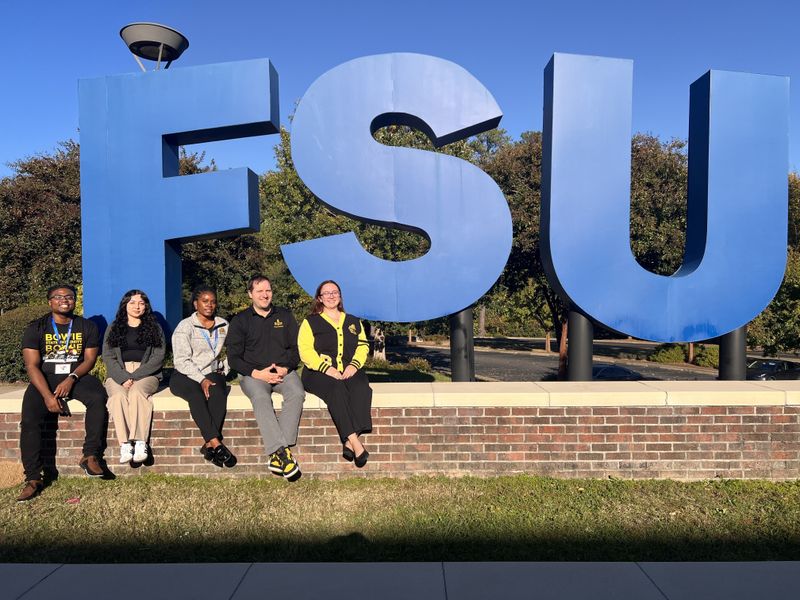
Innovative programming including he Open Payments Hack on Rails event between BSU and Fayetteville State University
Traveled to Cape Town, South Africa, with a student to participate in the Interledger Hackathon at the University of Cape Town
Various workshops on topics including Rafiki, Interledger Wallets, and open payments
Weekly ILP Pizza and Me events where students would learn about current events, active ILP projects, and engaging activities, including playing the prototype Stairs and Spirals: The Financial Journey game.
Project Update
At the core of this grant, BSU sets out to recruit and lead HBCU students to opportunities in open payments and digital financial inclusion. The grant focused on raising awareness and supporting HBCUs in helping their students with digital finance. BSU's efforts, led by the College of Business, empowered students to become active participants, builders, and future leaders in the broader Interledger ecosystem.
Initially centered around BSU students raising awareness and skills efforts through workshops, course modules, and microinternships, we learned to leverage the strength of the HBCU network. The highest impacts occur when HBCUs come together, and we brought Interledger-aligned activities directly to other campuses using BSU as a hub for convening, continuity, and mentorship. The key pivot was bringing the early successes at BSU to other HBCUs. Bringing Interledger to campus strengthens students, HBCUs, and the community.
BSU is not working alone and would not have made an impact without the support and guidance of the community. Early course and program phases were crucial in building community and reinforcing a message that students need to hear repeatedly: you belong, your voice is needed now, and you can do it (self-efficacy). Our next step is to provide better resources to the HBCU network and beyond, meeting students where they are, helping them move forward, and offering mentorship and leadership to support their continued progress.
We (not just BSU - but us) are making this happen. By combining real-world learning, community immersion, and supporting resources, we are helping the underrepresented and the underbanked. BSU appreciates the guidance and support.
Project Impact & Target Audience(s)
The intended impact of this project was to broaden who participates in (and ultimately shapes) open payments and helps digital financial inclusion by creating practical, repeatable pathways that move HBCU students from awareness → skill-building → contribution, and career opportunity. The grants' outputs directly support the Interledger Foundation’s mission to broaden the diversity of voices in the tech ecosystem using ILP as a driver for digital financial inclusion and align with our grant plan to recruit, connect, and develop HBCU students involved in open payments, digital financial inclusion, and underserved communities.
Actual impact and who benefits
Primary direct beneficiaries: Over 700 HBCU students (BSU + partner HBCUs) who gained exposure, skills, mentorship, and confidence through facilitated pathways (courses, workshops, micro-internships, events, travel/community immersion, and conferences).
Secondary beneficiaries: the Interledger ecosystem and partners, who benefit from a larger, more diverse contributor pipeline and increased awareness of ILP/open payments across multiple campuses, plus repeatable engagement models and public-facing resources (progress report and community posts).
Longer-term beneficiaries: underbanked and underserved communities, as the project’s focus on digital financial inclusion and open payments talent development strengthens the workforce and ideas needed to build more accessible financial infrastructure.
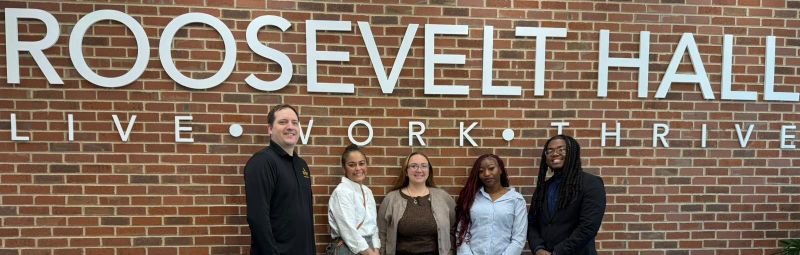
Indirect and attributed impacts: The Open Payments Hack on Rails event between BSU and Fayetteville State University resulted in a partnership between the two institutions. The event initially sent seven students and two faculty to participate, leading to the first FSU FinTech event, which opened doors for new presentations and engagements, and ultimately brought us to this year, where four BSU students earned third place out of six in what I believe is the MIS department’s first-ever business case competition.
Let me also take a moment to recognize the diverse talent pipelines that BSU is bringing into the Fintech space. The business case competition team consisted of a first-generation student from El Salvador, a single mother, an African American male majoring in IT, and a member of the LGBTQ+ community.
The visibility is great, but what really matters is the network and opportunity that Interledger has unlocked for our students. Through your support, we’ve been able to connect students not just to FinTech but to a growing ecosystem of learning and collaboration.
We’re seeing real momentum building in opportunities. None of this would have happened without Interledger’s support.
Student Reflection and Impact
Learning about the underbanked through Interledger has been life-changing, opening my eyes to how finance can be used as a tool for inclusion rather than exclusion. From programs like ILP Pizza and Me to hands-on projects like TreasuryConnect, I’ve gained both technical knowledge of open payments and real-world experience that continue to shape my academic journey, professional opportunities, and entrepreneurial vision. Most importantly, this work has inspired me to build a legacy of financial access, creating pathways for others to achieve opportunities that once felt impossible.
-Tomisin Laniyi (BSU Undergraduate – Business Administration Major) [Interledger Scholar, Interledger Summit 2023 Participant, Interledger Hack on Rails Participant]
Due to my family’s background of emigrating to the US from a small rural village in Nigeria. I observed how the lack of access to banks compelled people to rely on informal systems for saving and borrowing, which shaped my perspective on the importance of financial inclusion. Learning about the underbanked made me realize that financial tools are not privileges but essential lifelines that bring stability. Learning and working with open payments technologies has shown me how digital systems can remove barriers and create opportunities, allowing even small transactions to flow securely across borders. It gave me a vision of financial freedom that does not depend on location or traditional institutions. Learning about digital financial inclusion has impacted me personally by wanting me to assist and fix the struggles of my own community back in Nigeria, academically by giving my finance studies a deeper purpose, and professionally by inspiring me to pursue a career that bridges people and systems.
-Chimeziri Onyewu (BSU Undergraduate – Finance Major) [ILP Pizza and Me, BSU Fintech $print Participant]
Progress on Objectives, Key Activities
Over the course of the Bowie State University Partnership Grant ’23 (Feb 7, 2023 – Dec 22, 2025), our work evolved from a primarily course- and project-based effort into a repeatable, multi-campus engagement model designed to move HBCU students from awareness to action in open payments and digital financial inclusion. We combined academic on-ramps (course modules and structured learning) with engagement mechanisms, including micro-internships, weekly community meetups, hands-on sprints/hackathon-style activities, and conference/community participation, to build student confidence, portfolios, and networks. As we learned about the actions that sustained participation, we shifted away from relying on student-led clubs and toward facilitator-led pathways and partnerships across HBCUs, utilizing the BSU as a convening hub to scale impact and share resources, lessons learned, and public outputs with the broader Interledger ecosystem.
Objective 1 — Revise BUIS 400 - Special Topics to require contributions to open-source/open-protocol communities
What we did: Launched and delivered BUIS 400 to orient students to open protocols, distributed collaboration, and GitHub-based contribution workflows.
How it evolved / why: Course-based contributions remained a strong on-ramp with focused effort, but we learned that students persist more when coursework is reinforced by ongoing community and events using a pathway model.
Outputs (examples): Student GitHub participation and project exploration.
Objective 2 — Update BUIS 463 - Digital Innovation and Entrepreneurship to encourage leading with empathy, customer discovery, and engagement opportunities
What we did: Continued evolving BUIS 463 content to better connect web participation to real-world opportunities and ecosystem engagement.
How it evolved / why: Rather than positioning this course trajectory as a prep for grant for the web proposals, we reframed it as an entrepreneurial thinking course with a focus on underrepresented populations, which builds skills, confidence, and a portfolio for underserved communities. This approach resonated strongly with students.
Outputs: Course learning materials/assignments.
Objective 3 — Support student contributions to open protocols (ongoing)
What we did: Implemented mentoring + support structures, paired students with projects and community resources, and used micro-internships as an always-open onramp.
How it evolved / why: Student demand favored practical, hands-on experiences and clearer “what to do next” steps. This pushed us toward facilitated pathways, micro-internships, and sprints over one-off workshops.
Outputs (public):
“Community-based micro-internships”: https://community.interledger.org/andrewmangle/community-based-micro-internships-e1k
“Connecting students”: https://community.interledger.org/andrewmangle/connecting-students-239l
Objective 4 — Support development of open protocol clubs
What we did: Initially, we planned student-led clubs as a key mechanism.
How it evolved / why: We deliberately shifted away from student-led clubs as the primary vehicle because clubs were less effective post-pandemic; students faced competing priorities, and sustaining club participation was challenging.
Replacement activities (better fit): Weekly facilitated meetups (“ILP Pizza & Me”), workshops, curated sprints, and travel-based community engagement that produced stronger continuity and outcomes.
Objective 5 — Build partnerships/alliances with HBCUs and aligned organizations
What we did: Expanded activity beyond BSU by taking Interledger-aligned engagement to other campuses and collaborating with peer HBCUs (e.g., multi-campus events, joint engagements). This aligns with the proposal’s partnership objective.
How it evolved / why: We validated that growth required visiting students (multi-campus model), rather than asking students to self-organize and come to a single hub.
Outputs: Fintech $prints and conference attendance
Objective 6 — Submit a larger collaborative NSF grant with ILF + HBCU collaborators
What we did: Initiated conversations and laid the groundwork for collaboration as proposed.
How it evolved / why: As the scope shifted toward facilitated pathways and practical experiences, effort concentrated on building a repeatable operating model and partner network first (so a future NSF submission is stronger and more evidence-based).
Outputs: Collaboration groundwork (planning notes, partner conversations), and a smaller NSF grant led by ILF was submitted
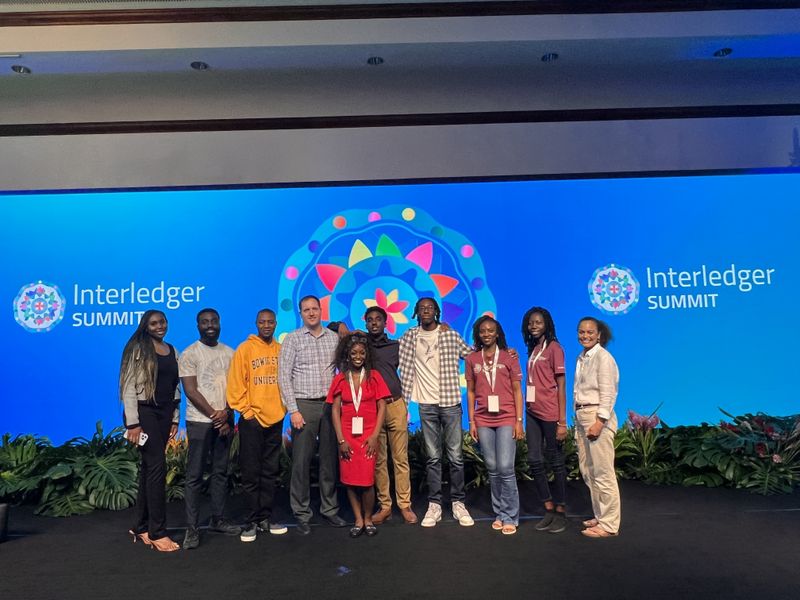
Objective 7 — Send students to the 2023 Interledger Summit
What we did: Summit participation and conference-based community engagement became a high-impact lever for recruitment, confidence, and network-building—consistent with the original plan.
How it evolved / why: Travel proved to be one of the strongest “conversion points” from engagement to a deeper commitment, so we preserved and expanded this approach within the revised scope.
Outputs: Public reporting links were maintained in ILF documentation, including the progress report link below. Students attended the 2023 and 2025 Interledger Summit.
Objective 8 — Launch an incubator for contributors/communities/technologies
What we did: Began incubator planning as the original “hub” concept.
How it evolved / why: The “incubator” function effectively became a facilitated pathway + mentorship + event engine (curated experiences, micro-internships, workshops, and sprints), because that structure was more feasible and produced better engagement than formal club-based incubation.
Outputs: Pathway series and community posts (see Objective 3 outputs).
Objective 9 — Create student fellowships/scholars
What we did: Fellowship/scholar-style support shifted toward smaller stipends, targeted student support, and experience-driven engagement (micro-internships, sprints, travel). This matched student motivations and improved participation.
Outputs: Micro-internship model and Student Scholars (3) (see Objective 3 outputs).
Communications and Marketing
What’s Next?
This grant confirmed that the model is effective. The next phase involves scaling it through asynchronous, global onboarding materials (gathering existing and creating new resources), a stronger information architecture for learning, and a badge system that recognizes and incentivizes meaningful projects so students and community members have the context and pathways needed to become contributors. We're seeking mentors and strategic partners to help scale our programming, especially HBCUs and organizations willing to co-host events. We'll bring BSU to YOU!
Connect with more HBCUs by engaging with faculty advocates and students with BSU serving as the digital financial inclusion and open payment launchpad and accelerator
Form alliances with organizations aligned with digital financial inclusion, open web payments, and inclusive systems
Create the resources and pathways that empower to students to contribute by offering training, structure, pathways, and mentorship
Strengthen multi-year sustainability by strengthening partnerships and accessible resources
Community Support
Bowie State University, the College of Business, its students, and I are grateful to the Interledger Foundation team for their bold and future-focused approach to community building, particularly the intentional and growing inclusion of HBCUs as part of the long-term ecosystem strengthening.
Additional Comments
If you think a student, faculty member, or HBCU would benefit from this work, please connect with me here or on LinkedIn
We're excited to share resources, lessons learned, and replicate successes! :)


Top comments (0)